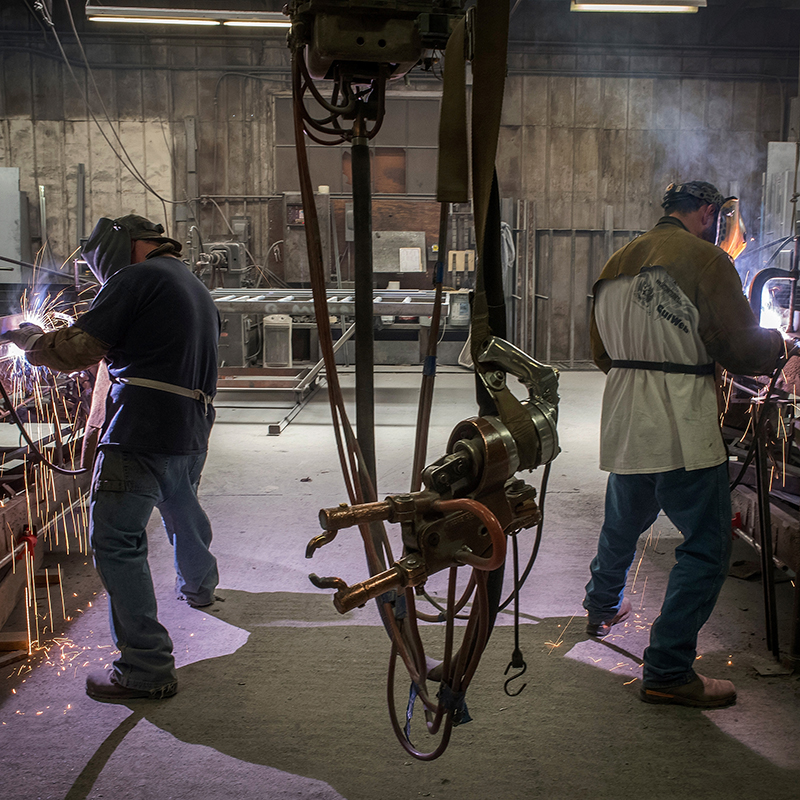
 Workers weld seams at the a metal manufacturing facility in Sacramento, California.
U.S. manufacturing expanded in February, but input prices rose at the fastest pace since 2022, stoking fears of an inflation resurgence even before this weekend's attacks on Iran.
The Institute for Supply Management's (ISM's) gauge of prices paid for manufacturing inputs jumped 11.5 points, to 70.5, the highest level since overall inflation peaked nearly four years ago. The figures out Monday reflected responses ahead of U.S. and Israeli airstrikes on Iran this past weekend. The war has all but halted oil tanker traffic through the Strait of Hormuz and pushed crude prices sharply higher.
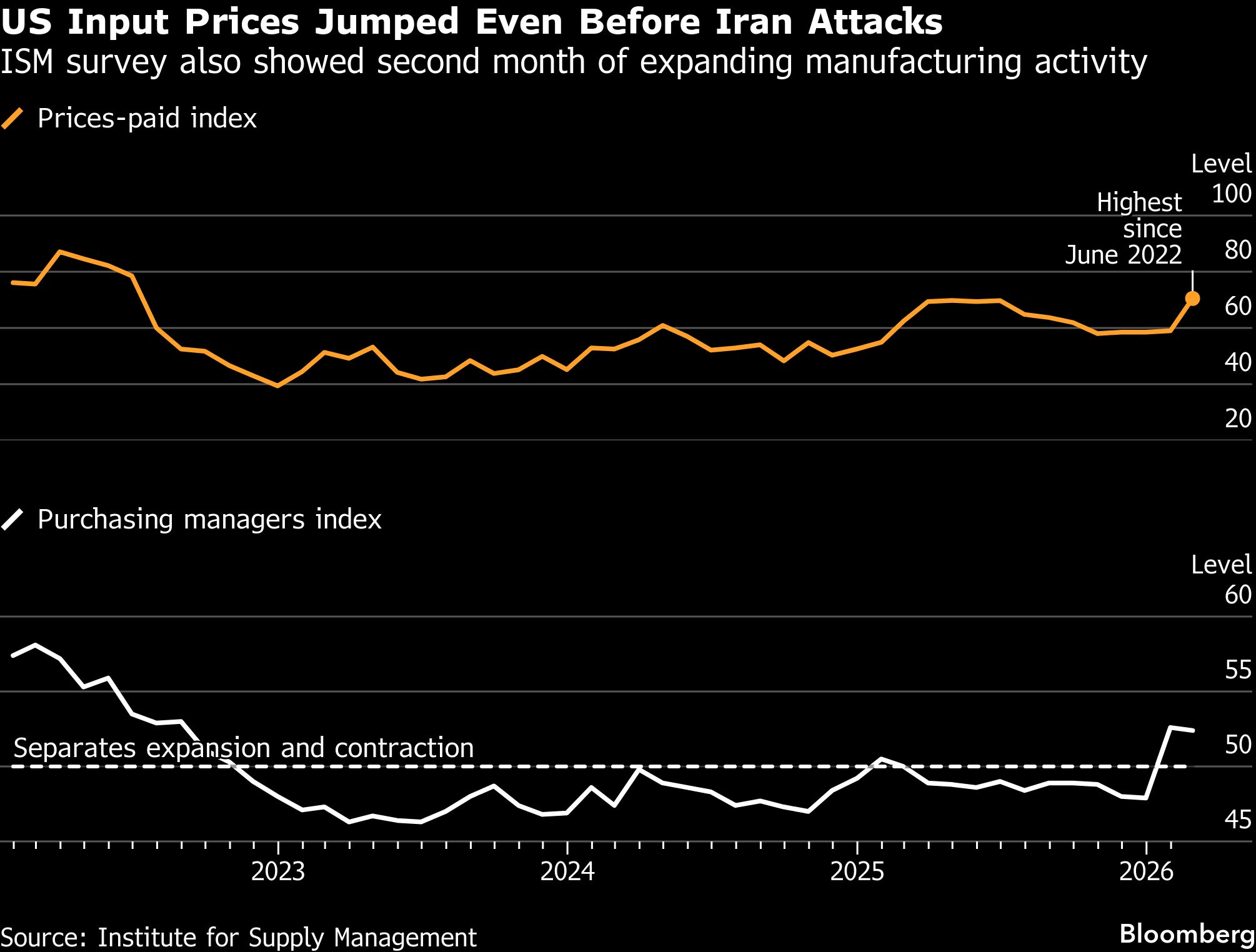
The conflict in Iran also risks tempering a nascent recovery in manufacturing. ISM's measure of factory activity was little changed at 52.4, indicating a second month of growth at one of the highest readings in recent years. Orders and production growth remained solid. However, the group's price gauge is likely to remain elevated or even push higher over the near term, after oil prices jumped today by the most since early 2022, when Russia invaded Ukraine.
Higher energy prices represent the latest cost challenge for manufacturers. If sustained, producers may have little choice but to raise prices for their business customers and consumers. The impact on prices from the Middle East turmoil will depend on the duration of the conflict and where primary materials are sourced, said Susan Spence, chair of the ISM Manufacturing Business Survey Committee.
"It really does depend on the sector and where they're importing their raw materials from," Spence said on a call with reporters. "In general, the supply managers have yet another challenge on their hands."
Producer price data out last week showed the cost of unprocessed goods, minus food and energy, rose more than 15 percent in January from a year ago, the steepest annual gain since April 2022. A Bloomberg index of metals, including copper and aluminum, has also increased sharply this year.
The combination of recent price data and geopolitics points to a steady undercurrent of inflation for U.S. producers, which is being partially fed by higher tariffs from the Trump administration. It also explains why Federal Reserve policymakers are in no rush to lower interest rates after three straight cuts at the end of 2025.
.Select Comments from the ISM Report"Today, American-produced commodities like steel and aluminum are the highest-priced in the world, by far. Hence, the Section 232 tariff policy is having the exact opposite effect of their intention on an American manufacturer like us: It is raising prices while lowering demand and profitability." — Executive in the Transportation Equipment Sector"January sales continued to provide positive indications for growth opportunities... We continue to receive price increase notifications from suppliers based on unsupported tariff claims and are expanding corporate staff to support sales growth." — Chemical Products "Continue to be impacted by tariffs. Seeing metals prices rise too. Business is steady, but domestic growth is slower than expected." — Computer & Electronic Products "Tariff policy changes affect total acquisition costs and purchasing source decisions. So far this year, tariff instability still exists. Due to the tariffs, most raw materials used in manufacturing, such as steel and wire, need to be sourced domestically, and the cost keeps going up." — Machinery "Business is improving by the week. Backlog is growing, and new opportunities are everywhere." — Fabricated Metal Products |
Twelve manufacturing industries reported growth in February, led by printing, textile mills, and primary metals. Five industries contracted, including apparel and furniture.
The ISM report also showed longer supplier delivery times for manufacturers, with a measure rising to the highest level since May. That could reflect ongoing supply-chain challenges as producers adjust to tariffs. Order backlogs also mounted, with the group's measure jumping 5 points to the highest level since May 2022. That likely includes the impact from resilient economic activity.
Meanwhile, factory employment shrank at a slower pace. The group's index improved to 48.8, the highest in a year. Almost one in five respondents reported higher employment in the month, the largest share since 2022. The Bureau of Labor Statistics (BLS) will release the February jobs report on Friday.
————————————————————
Copyright 2026 Bloomberg. All rights reserved. This material may not be published, broadcast, rewritten, or redistributed.
© Arc, All Rights Reserved. Request academic re-use from www.copyright.com. All other uses, submit a request to TMSalesOperations@arc-network.com. For more information visit Asset & Logo Licensing.