 A driver refuels a vehicle with unleaded gasoline at a Mobil gas station in New York. Photographer: Victor J. Blue/Bloomberg.
U.S. retail sales jumped in March by the most in a year, suggesting that consumers continue to spend on a wide array of merchandise despite a surge in gasoline prices sparked by the Iran war. The value of overall retail purchases increased 1.7 percent last month, following a revised 0.7 percent gain in February, according to a Commerce Department report published today. The data are not adjusted for inflation.
While the March increase was led by a record increase in spending on gas, nearly every category in the report—from furniture to electronics to general merchandise—posted an increase.
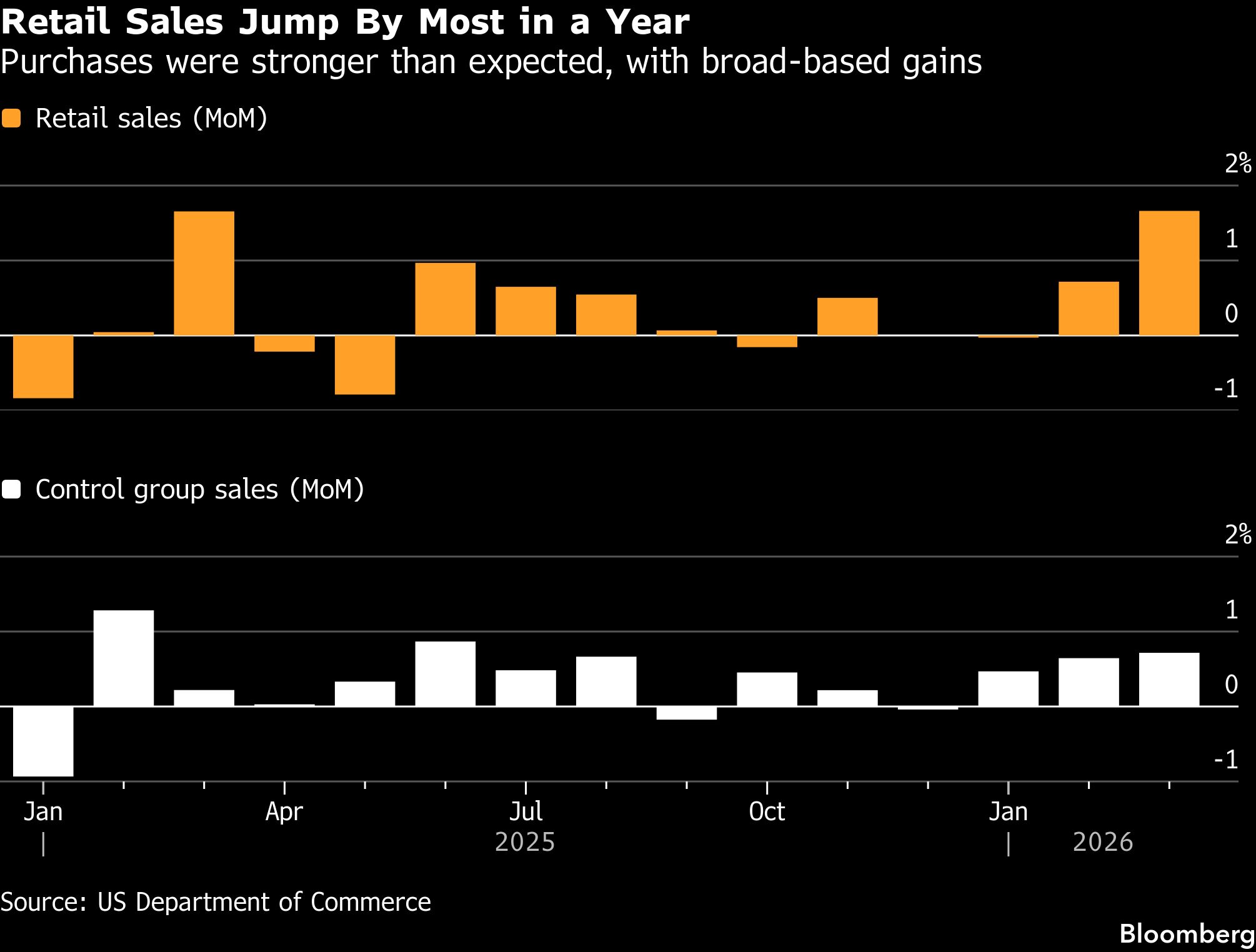
The report suggests consumer spending remained solid last month even as prices at the pump rose. That strength likely reflects larger-than-usual tax refunds flowing into households' bank accounts in recent weeks. As a result, forecasters may boost estimates for first-quarter gross domestic product (GDP), which the Bureau of Economic Analysis will publish on April 30.
Still, economists caution that the boost may prove temporary as tax season winds down, fuel costs remain elevated, and hiring stays subdued. "Overall, the American consumer is still healthy," Heather Long, chief economist at Navy Federal Credit Union, said in a note. "Extra income from tax refunds is helping many households weather this oil shock, but that extra money won't last forever."
Excluding gas stations, sales rose a firm 0.6 percent in March. Motor vehicle sales were up 0.5 percent. Receipts at restaurants and bars, the only service-sector category in the report, advanced 0.1 percent.
.What Bloomberg economists say..."Higher gasoline prices amid the Iran war drove the headline gains in March retail sales. Even with consumers forced to allocate more of their budgets to energy, overall demand held up better than expected, likely reflecting larger tax refunds and continued resilience among higher-income households. The picture is less sanguine once we account for inflation, however."— Eliza Winger |
High-frequency card data have been mixed in recent weeks. Reports from PNC Financial Services Group Inc. and the Bank of America Institute pointed to strength in spending in discretionary categories such as travel and electronics, while Visa's Spending Momentum Index suggested that—excluding gas—spending across discretionary, non-discretionary, and restaurant categories declined.
Tdoay's retail sales report showed so-called "control-group sales"—which feed into the government's calculation of GDP—were up 0.7 percent, the most since August. The measure excludes food services, auto dealers, building materials stores, and gas stations.
————————————————————
Copyright 2026 Bloomberg. All rights reserved. This material may not be published, broadcast, rewritten, or redistributed.
© Arc, All Rights Reserved. Request academic re-use from www.copyright.com. All other uses, submit a request to TMSalesOperations@arc-network.com. For more information visit Asset & Logo Licensing.