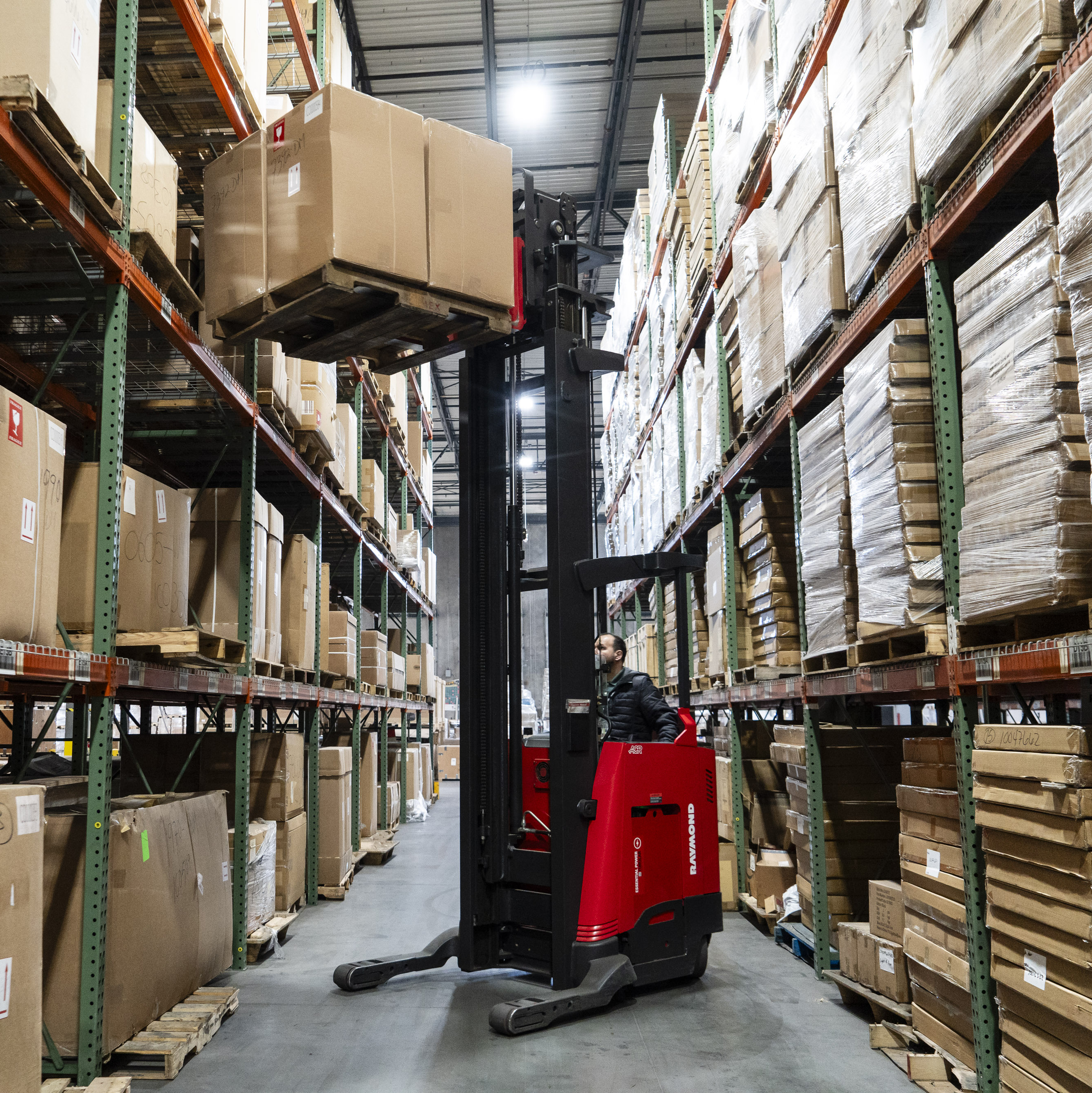
 A worker operates a forklift at a fulfillment center in Elizabeth, New Jersey.
U.S. wholesale inflation unexpectedly declined in August for the first time in four months, adding to the case for the Federal Reserve to cut interest rates.
The producer price index (PPI) decreased 0.1 percent from July, and July’s figure was revised down in a Bureau of Labor Statistics (BLS) report out today. From a year ago, the PPI rose 2.6 percent.
This suggests that companies refrained from outsized price increases last month despite facing higher costs from President Donald Trump’s tariffs. While the step back follows a sizable advance in July, many firms have been wary that steep markups could push customers away at a time when economic uncertainty continues to weigh on spending decisions.
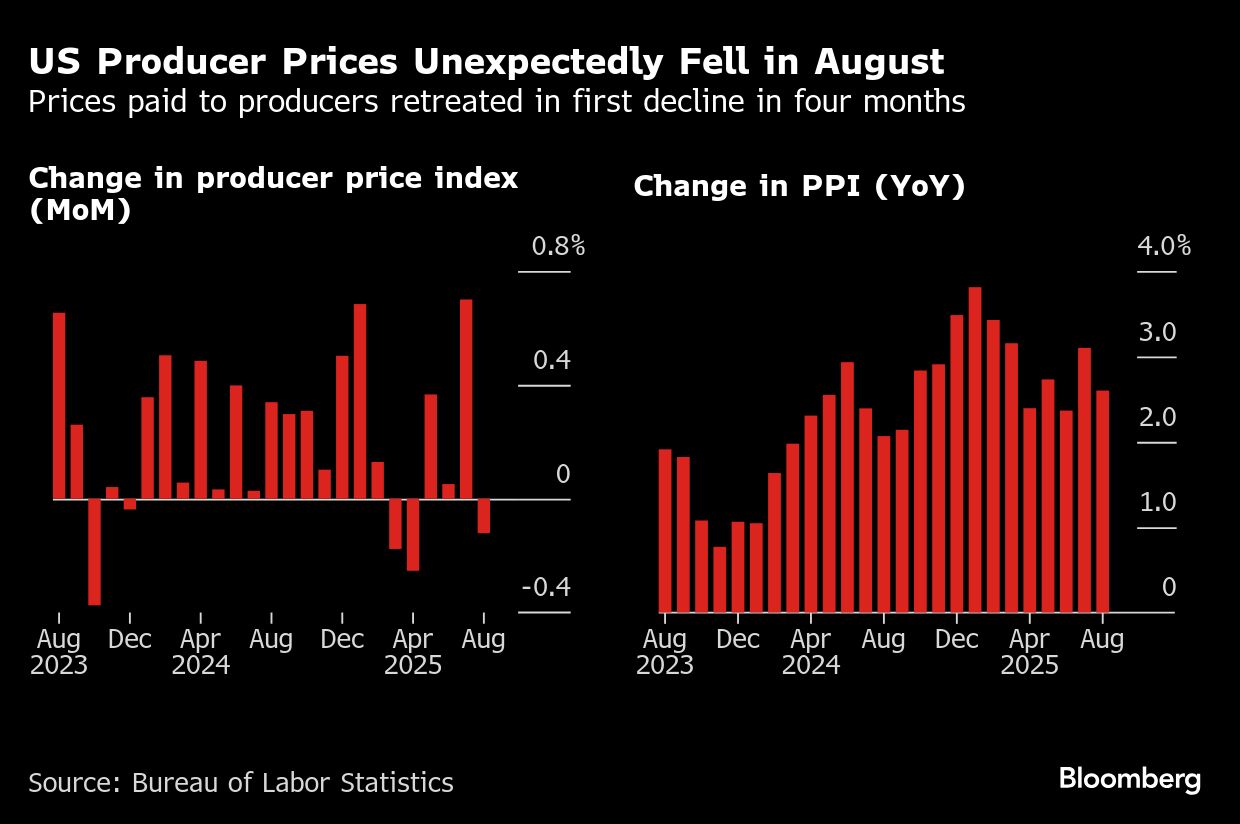
In the BLS report, goods prices excluding food and energy rose 0.3 percent. Services costs fell 0.2 percent. Within services, margins at wholesalers and retailers fell 1.7 percent, matching the biggest drop in data going back to 2009 and reversing an outsize increase in July. Margins have been volatile from month to month so far this year, underscoring uncertainty around the impact of trade policy on prices and demand.
“It does look like retailers have been eating tariff costs in recent months,” Stephen Stanley, chief economist at Santander U.S. Capital Markets LLC, said in a note. “Firms have consistently said that they have held the line as long as they could, but that they would need to begin selectively hiking prices going forward.”
The extent to which companies pass the burden from tariffs on to consumers will be key in shaping the path for interest rates this year. While Fed officials generally expect import levies to push inflation higher through the remainder of 2025, they’re undecided over whether it will be a one-time adjustment or a more enduring effect.
Three-quarters of the decline in services prices in August could be attributed to a 3.9 percent drop in margins for machinery and vehicle wholesaling, according to the BLS. Finished consumer goods excluding food and energy, meanwhile, rose at the fastest pace since February. That was boosted in part by a jump in prices for tobacco products, which the BLS said was a “major factor” driving goods prices higher. Consumer price data due out tomorrow will offer insights on the extent to which tariffs made their way to American households in August. Forecasters expect another elevated monthly advance in the core measure which excludes food and energy.
Policymakers are largely expected to cut rates when they meet next week in an effort to counter a rapid slowdown in the labor market. Fed Chair Jerome Powell cautiously opened the door to a cut at the Fed’s Jackson Hole symposium last month, and more recent data showed the hiring slowdown extended into August.
Economists also pay close attention to the PPI report because some of its components are used to calculate the Fed’s preferred measure of inflation, the personal consumption expenditures (PCE) price index. Those measures were mixed in August: Portfolio management services and airfares continued to rise at a solid pace, while various measures of healthcare services were more tame.
A less-volatile PPI metric that excludes food, energy, and trade services rose 0.3 percent. Costs of processed goods for intermediate demand, which reflect prices earlier in the production pipeline, rose 0.4 percent.
————————————————————
Copyright 2025 Bloomberg. All rights reserved. This material may not be published, broadcast, rewritten, or redistributed.
© Arc, All Rights Reserved. Request academic re-use from www.copyright.com. All other uses, submit a request to TMSalesOperations@arc-network.com. For more information visit Asset & Logo Licensing.