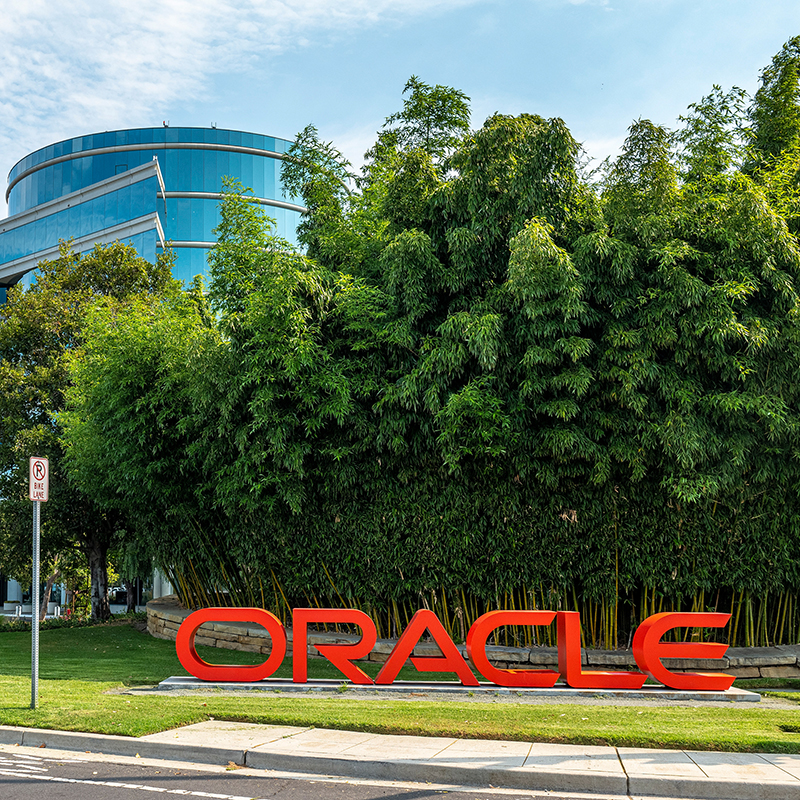
 Oracle Corp. headquarters campus in Redwood City, California.
Oracle Corp. sold $18 billion of U.S. investment-grade bonds today, the market’s second-largest deal this year, as the software maker ramps up its spending to meet the needs of the artificial intelligence (AI) boom. Demand peaked at nearly $88 billion, according to a person with knowledge of the matter.
The technology giant—which has nearly doubled in value this year—is issuing debt in six parts, including a rare 40-year bond, people familiar with the matter said, asking not to be identified discussing private details. That note will yield 1.37 percentage point above similarly dated Treasuries, compared with initial price talk of about 1.65 percentage point. A floating-rate tranche was dropped during syndication.
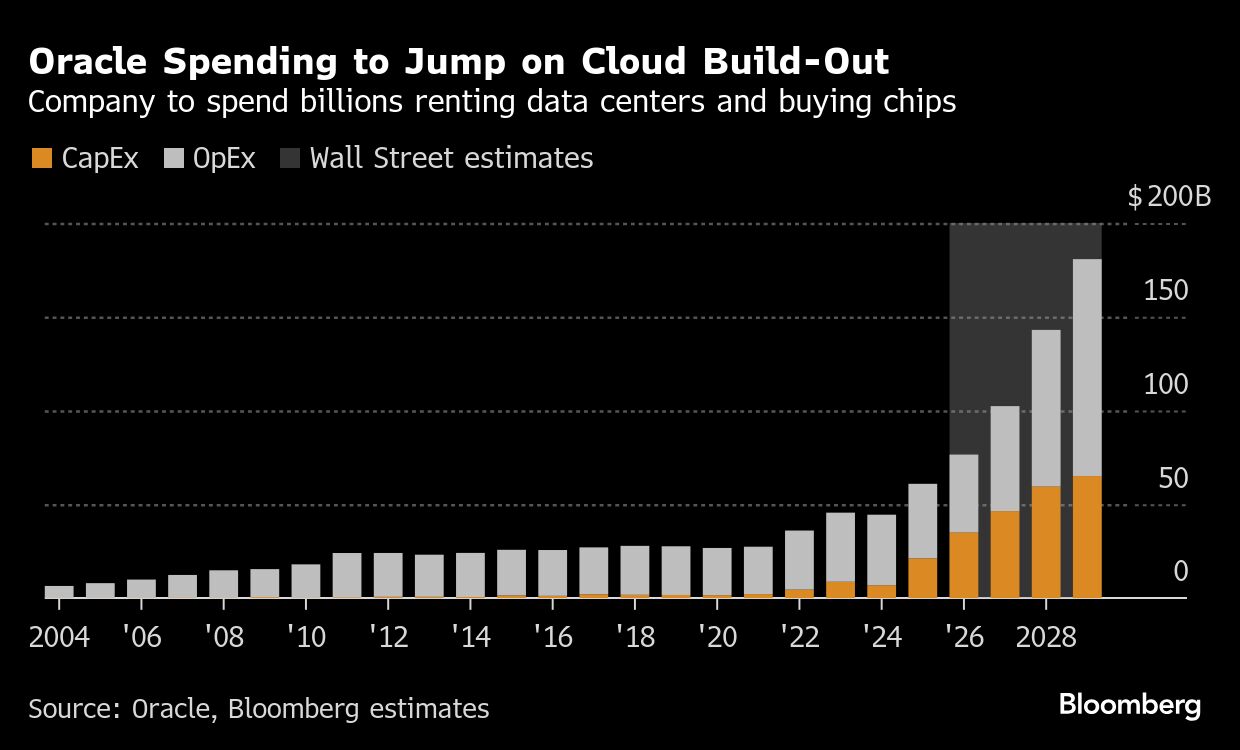
The debt issue comes as Oracle begins to fulfill massive cloud infrastructure deals with customers like OpenAI and Meta Platforms Inc., which are boosting the company’s expenses. Over the next several years, it is projected to spend hundreds of billions of dollars to rent and power data centers. Oracle is also the cloud provider to TikTok in the United States, and under a new framework outlined by the White House earlier this week, it would help oversee the development of a new U.S.–only version of the social media giant’s algorithm.
The software company spent years trailing the top three vendors in the competitive cloud infrastructure market—Amazon.com Inc., Microsoft Corp., and Alphabet Inc.’s Google. Now that it has struck serious cloud deals, it’s on the hook for upfront costs. Oracle’s cash flow flipped negative this year for the first time since 1992. Analysts anticipate the metric will be in free fall over the coming years before returning to positive in 2029.
Representatives for Oracle didn’t respond to a request for comment. Proceeds from today’s bond sale can be used for capital expenditures, future investments or acquisitions, or other general corporate purposes, including debt repayment.
Oracle had about $95 billion of long-term debt outstanding at the end of August, according to a securities filing. With this latest debt deal, a measure of Oracle’s leverage relative to its earnings may climb, though it should still be able to maintain its high-grade ratings, Bloomberg Intelligence analysts Robert Schiffman and Alex Reid wrote.
“This is not the ‘If we build it, they will come,’” Schiffman said of Oracle in an interview. “They’ve already come, contracts are in place, the demand is there. Now they just have to put the infrastructure in place. And I think that’s why people are so confident from the credit side, why they’re ... able to borrow so much money at pretty reasonable rates.”
| This Year’s Biggest Bond Deals | ||
|---|---|---|
| Issuer | Month | Size |
| Mars | March | $26 billion |
| Oracle | September | $18 billion |
| NTT Finance | July | $11.25 billion |
| Synopsys | March | $10 billion |
| Bank of America | January | $10 billion |
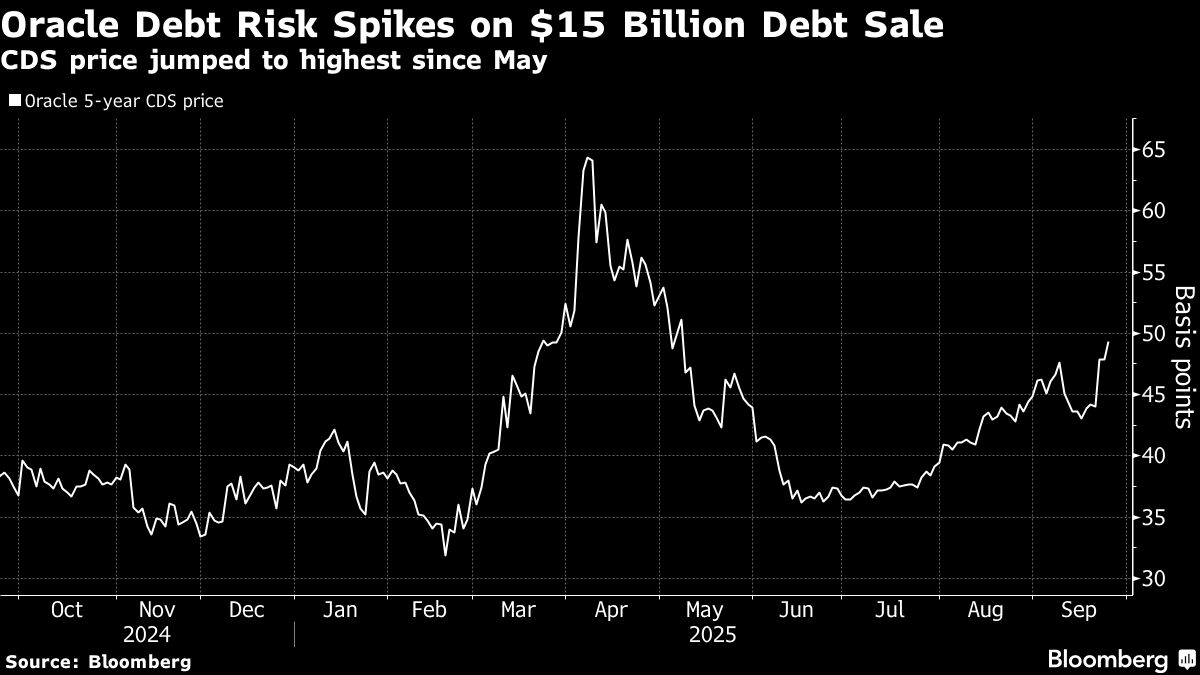
Oracle is already the biggest issuer in an index of investment-grade tech companies, and today’s blockbuster sale may be just one of many to come as firms build out their AI infrastructure. The company will need to issue around $65 billion of debt through 2028 to fund its growth, according to estimates from research firm CreditSights. It last sold debt in January. Today the cost of insuring Oracle’s debt against default over the next five years jumped to the highest level since May 7.
Investors are closely watching any changes to Oracle’s financial approach after the company announced earlier this week that longtime CEO Safra Catz would be replaced. “There is uncertainty about whether the strong cost discipline seen under Safra Catz may be disrupted,” wrote Brent Thill, an analyst at Jefferies, on Monday.
Bank of America Corp., Citigroup Inc., Deutsche Bank AG, Goldman Sachs Group Inc., HSBC Holdings Plc, and JPMorgan Chase & Co. led the bond deal. Representatives for HSBC and JPMorgan didn’t return requests seeking comment, while spokespeople for the other banks declined to comment.
Oracle’s deal adds to a busy month for U.S. high-grade bond sales. Through today, companies have sold more than $190 billion of debt in September, the most since February of last year, Bloomberg-compiled data shows. Borrowers are piling into the market to take advantage of falling yields and historically tight risk premiums.
————————————————————
Copyright 2025 Bloomberg. All rights reserved. This material may not be published, broadcast, rewritten, or redistributed.
© Arc, All Rights Reserved. Request academic re-use from www.copyright.com. All other uses, submit a request to TMSalesOperations@arc-network.com. For more information visit Asset & Logo Licensing.