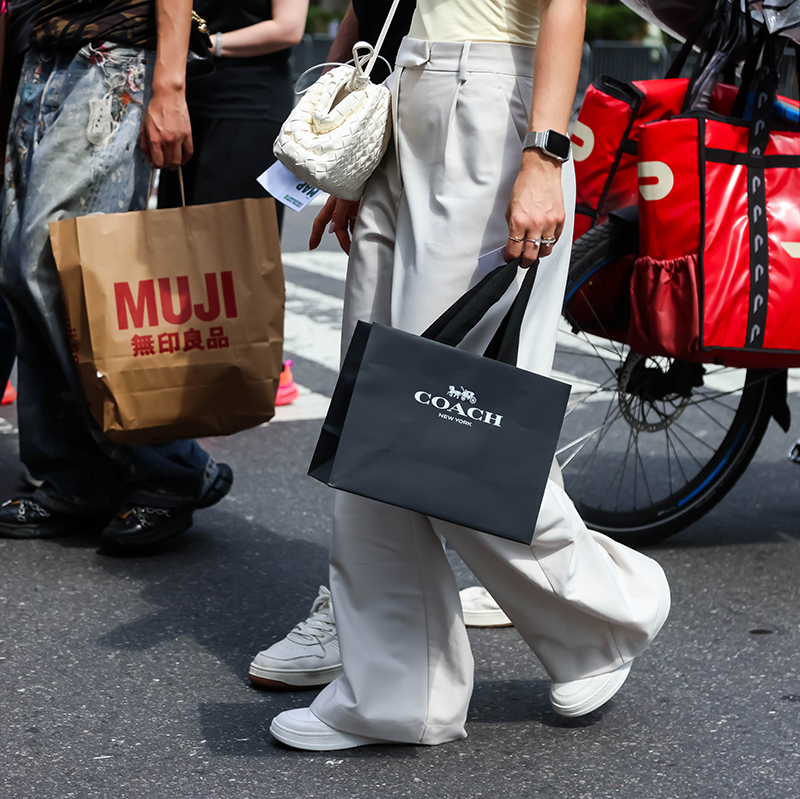
 Shoppers carry store bags in New York City on September 6, 2025.
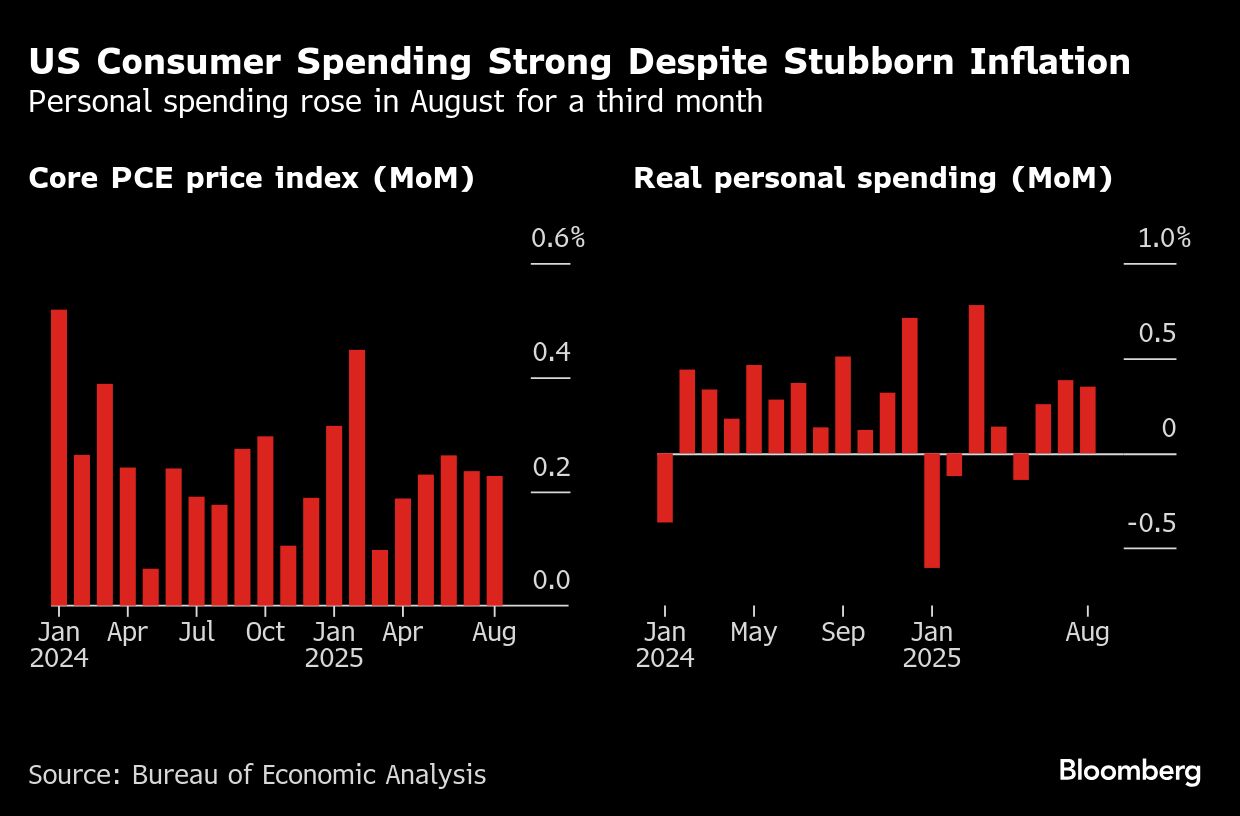
Personal spending in the United States rose at a solid clip in August for a third straight month, suggesting that consumers continue to power the economy despite elevated inflation. Adjusted for changes in prices, consumer spending increased 0.4 percent last month, according to Bureau of Economic Analysis (BEA) data out today.
The consecutive strong gains in consumer spending add to evidence of a solid economy in the current quarter, building upon even greater growth in the prior period than previously thought. However, maintaining such momentum hinges in large part on the labor market, which has shown signs of faltering, with slower hiring and more moderate wage gains.
The recent trend in spending “lacks firm foundations,” Samuel Tombs, chief U.S. economist at Pantheon Macroeconomics, said in a note. With tepid expectations for real net incomes going forward, households “will have to reduce their savings rate further in order to fund growth in real spending.”
Americans are also still dealing with sticky inflation, which risks staying elevated as President Donald Trump’s tariffs trickle through the economy. The so-called core personal consumption expenditures (PCE) price index, which excludes food and energy items and is favored by the Federal Reserve, rose 0.2 percent from July. From the prior year, the gauge held stubbornly at 2.9 percent.
Fed Chair Jerome Powell said last week that the impact from tariffs on inflation has been slower and smaller than previously thought. While many companies initially held off on raising prices as they worked through built-up inventories, profit margins are at risk unless firms pass along some of the higher costs.
Worries about elevated prices eroded consumer confidence in September, according to separate data out today. The University of Michigan’s consumer sentiment index fell to a four-month low, reflecting concerns about the risk of both higher inflation and a weaker labor market.
With inflation well above the Fed’s 2 percent target, several policymakers are indicating they’re hesitant to cut interest rates further. While the September employment report will be a key data point at the central bank’s next policy meeting, it’s unclear when officials will have those numbers in hand, with a government shutdown looming.
| Metric | Actual | Estimate |
|---|---|---|
| PCE price index (month-over-month) | +0.3% | +0.3% |
| Core PCE price index (month-over-month) | +0.2% | +0.2% |
| PCE price index (year-over-year) | +2.7% | +2.7% |
| Core PCE price index (year-over-year) | +2.9% | +2.9% |
| Real consumer spending (month-over-month) | +0.4% | +0.2% |
Spending on merchandise climbed 0.7 percent in August, reflecting discretionary purchases like furnishings, clothing, and recreational goods. Outlays for services advanced at a more tempered pace.
But it’s unclear how long consumers can keep spending with such gusto given the softening job market. Real disposable income barely rose, and wages and salaries, unadjusted for inflation, climbed at a slower rate than the previous month. Meantime, the savings rate declined to 4.6 percent, the lowest this year.
Services were the driver behind the advance in PCE inflation, while goods prices were tame. In particular, prices for recreational goods and vehicles, major appliances, and household supplies all declined. Such discounts helped propel spending in those categories. A closely watched metric of services inflation that excludes energy and housing rose 0.3 percent for a second month.
————————————————————
Copyright 2025 Bloomberg. All rights reserved. This material may not be published, broadcast, rewritten, or redistributed.
© Arc, All Rights Reserved. Request academic re-use from www.copyright.com. All other uses, submit a request to TMSalesOperations@arc-network.com. For more information visit Asset & Logo Licensing.