
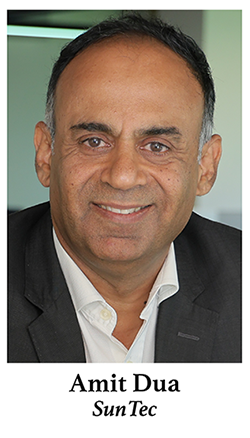
As corporate treasurers work to shore up liquidity in today's uncertain business climate, they often feel financial institutions are dragging their feet in the corporate-banking deal-making process. Treasury & Risk sat down for a quick chat with Amit Dua, the London-based president of SunTec, a provider of pricing and profitability software for financial institutions.
Treasury & Risk: Do you have advice for corporate treasurers frustrated by the sluggishness of banks in closing financing or transaction banking deals?
Amit Dua: The frustration is understandable. Treasury teams are managing liquidity positions, financial risk, and working capital on a nearly real-time basis, yet deal processes within banks often move through layered approval structures that feel anything but immediate.
It's important to understand that what is perceived as delay on the banking side is usually due to structural complexity. Pricing, credit, compliance, and product configuration frequently sit in different systems and governance channels within institutions. Even well-aligned relationship teams cannot always compress those internal cycles.
There are, however, practical steps treasurers can take to improve momentum.
T&R: What are some examples of steps treasurers can take to accelerate a specific transaction?
AD: Well, transactions tend to progress more smoothly where funding requirements are supported by clear assumptions on utilization, transaction volumes, tenor, and cross-product scope. A well-defined opportunity, backed by data rather than high-level narrative, is easier for a bank to navigate internally.
A good example is what happens after a corporate deal is signed. Most deals are built around clear commitments such as expected payment volumes, FX [foreign exchange] flows, utilization levels, and overall relationship value. What helps the bank move faster is when the treasury team shares those details up front rather than at a high level. Instead of saying "we expect significant volumes," corporate treasury can indicate specific expected monthly volumes for transactions, key currencies, utilization assumptions, and the products to be used. This enables the deal to be structured much more sharply and quickly, and it reduces the risk of misalignment later.
Timing also matters. Bringing banks into discussions while internal approvals are still being shaped can reduce rework later. For example, if a company is planning to consolidate cash management or cross-border payments, the conversation with the bank should begin while the internal business case is still being finalized. That allows both sides to align early on expected volumes, the products that will be used, and the overall value of the relationship. When that clarity is established up front, execution becomes much smoother with far less rework later; fewer iterations are needed once formal execution begins.
In practice, the strongest relationships between corporate treasury and partner banks are built on shared visibility and forward planning rather than episodic negotiation.
T&R: More generally, are there different ways in which corporate treasury customers should approach banking deals to streamline approval processes?
AD: Both the bank and its customers have responsibilities that can accelerate deals. Treasury teams can remove friction by presenting structured information from the outset, being clear on pricing expectations and decision timelines, and consolidating requirements across markets where possible. Fragmented mandates often translate into fragmented bank processes. In addition, if the corporate signals its intent to establish a longer-term relationship, that may influence the deal's internal prioritization within the bank.
That said, material acceleration ultimately depends on banks addressing their own operating models. Transaction banking remains relationship-led, but many institutions still rely on legacy platforms for pricing, bundling, and approvals. Those environments were not designed for real-time decision cycles. Banks that modernize their deal infrastructure are better placed to respond consistently, rather than relying on individual efforts to push transactions through. That is where trust is built over time.
T&R: You mentioned treasury's expectations with regard to pricing. Are there also steps corporate treasury teams can take to favorably impact pricing in their banking relationships?
AD: Yes, there definitely are. One of the key points highlighted in recent Celent research is that pricing in corporate banking is increasingly relationship-based rather than product-by-product. The more clearly a treasury team can articulate the full value of the relationship, the easier it will be for the bank to price the deal more competitively.
Consistency also matters. When banks have confidence that transaction volumes, utilization levels, and the relationship will remain stable over time, they are far more comfortable offering sharper pricing. Treasury teams that position the relationship as long-term and structured rather than purely transactional typically see better outcomes.
© Arc, All Rights Reserved. Request academic re-use from www.copyright.com. All other uses, submit a request to TMSalesOperations@arc-network.com. For more information visit Asset & Logo Licensing.