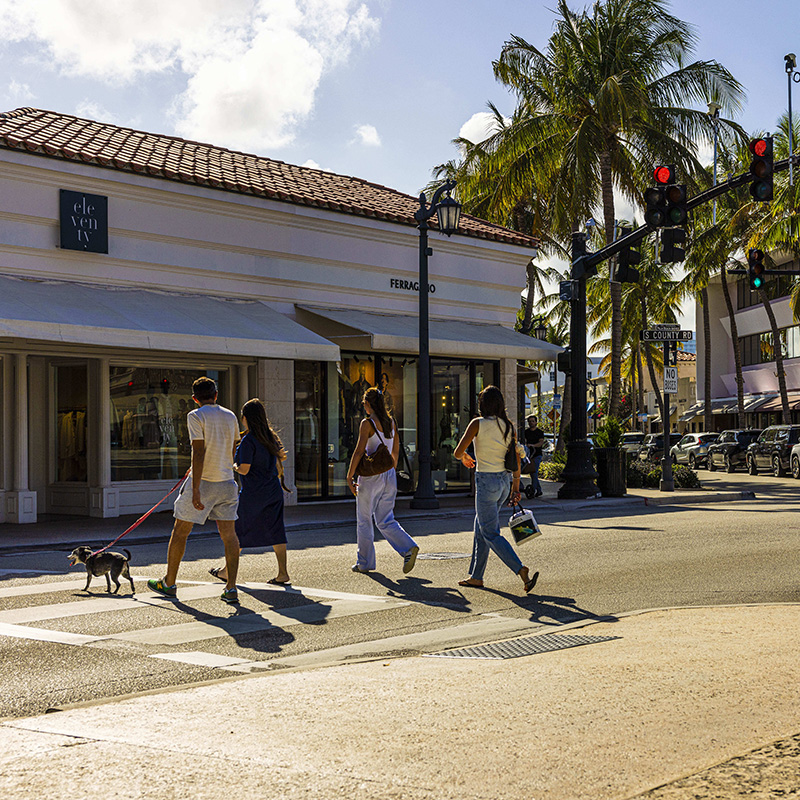
 Shoppers cross Worth Avenue in Palm Beach, Florida.
Economic growth in the United States accelerated at the start of the year, bolstered by a massive artificial intelligence (AI)–driven upswing in business investment.
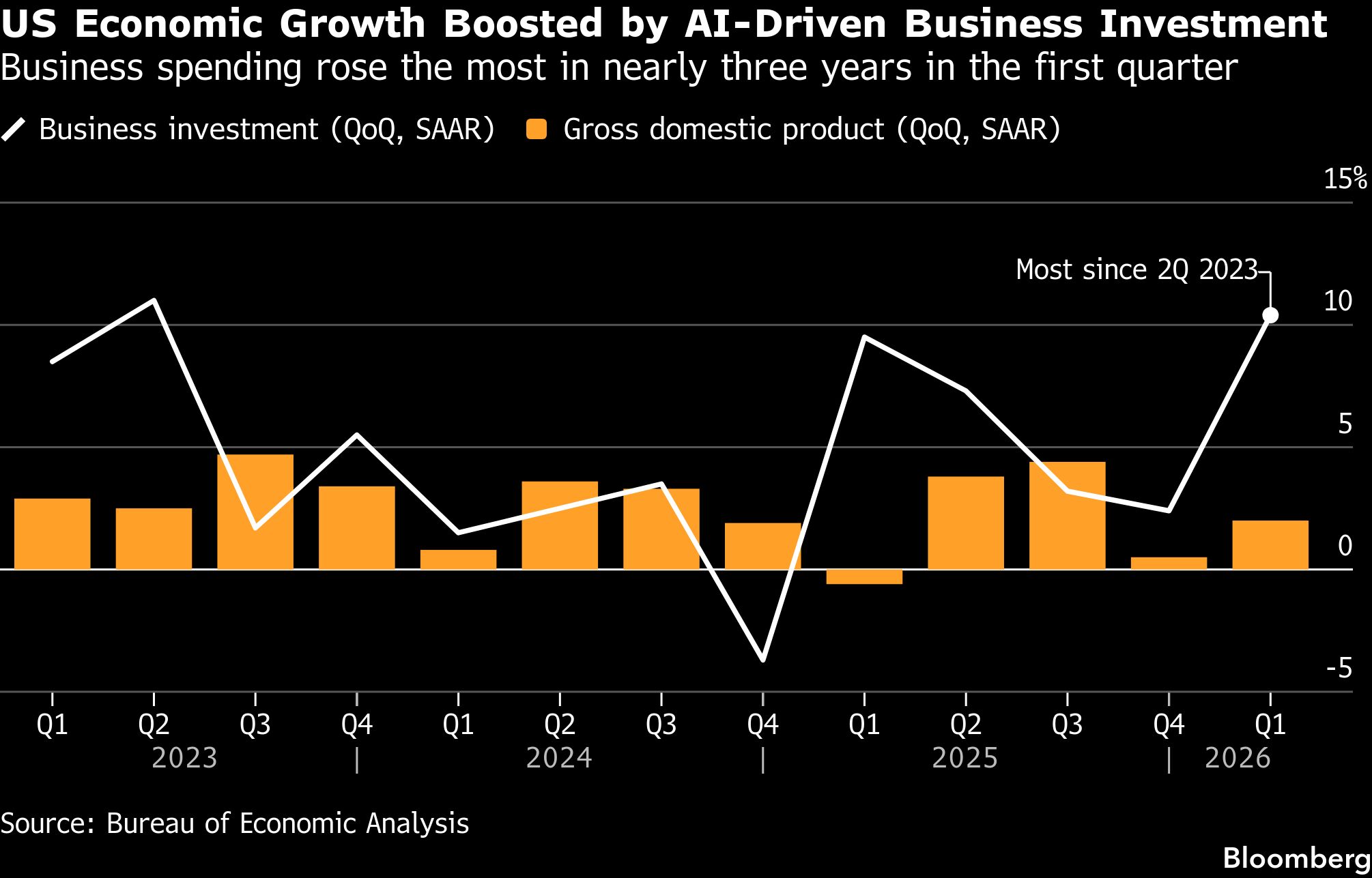
Inflation-adjusted gross domestic product (GDP) increased an annualized 2 percent in the first quarter after the longest-ever federal government shutdown limited growth in the closing months of 2025, according to an initial estimate issued today by the Bureau of Economic Analysis (BEA).
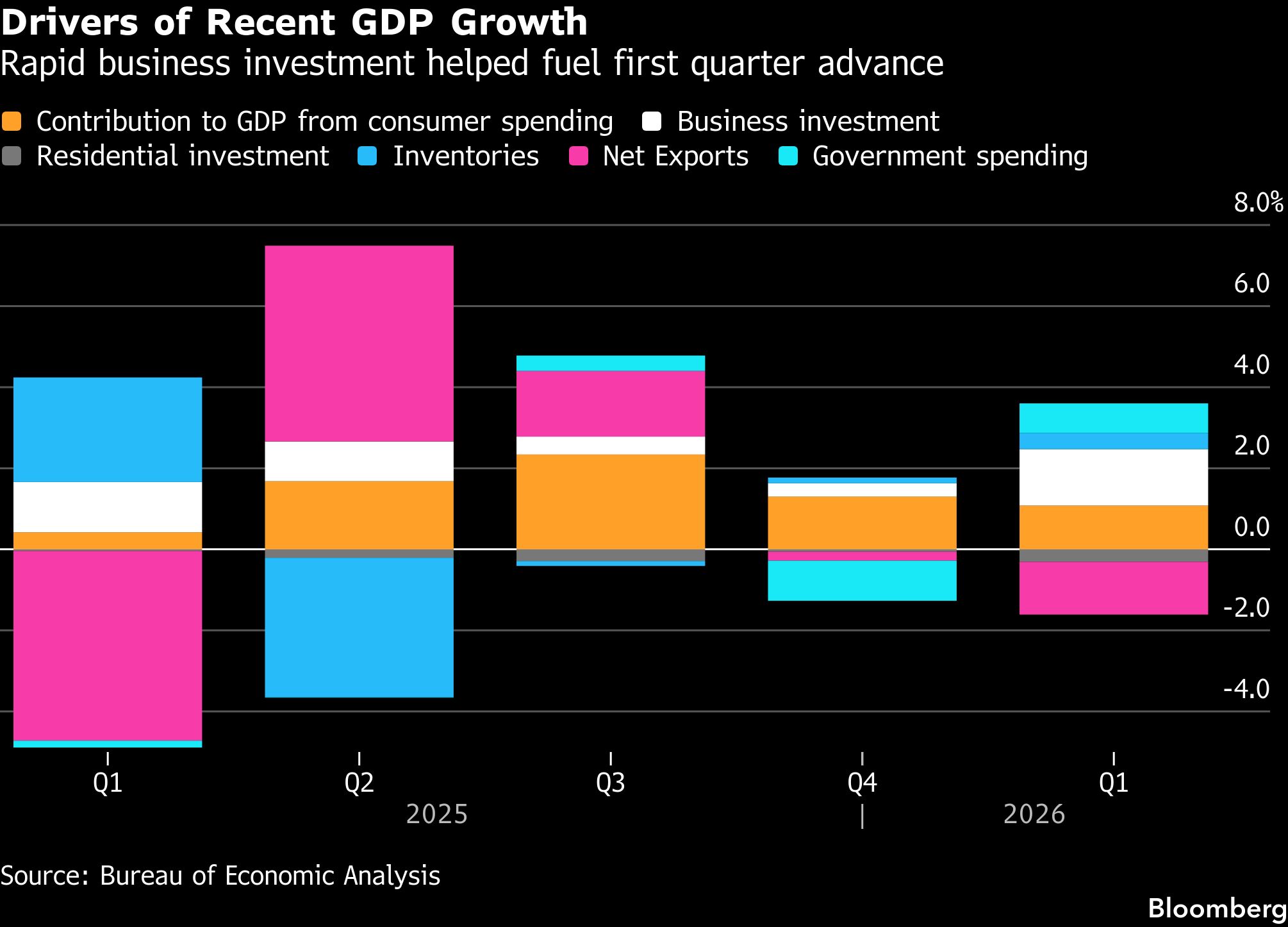
Consumer spending, which comprises about two-thirds of economic activity, increased at a better-than-expected rate of 1.6 percent, driven by demand for services including healthcare and financial services. Business outlays on equipment and structures advanced 10.4 percent, the fastest pace in almost three years and supported by rapid investment in AI infrastructure.
The report points to an economy that has so far held firm and is better positioned to withstand the fallout from the Middle East conflict, which is pushing oil prices sharply higher and disrupting global supply chains. Still, the geopolitical situation risks tempering growth should inflation-weary consumers become more guarded. While higher tax refunds helped to underpin household spending in the first quarter, the GDP report showed inflationary pressures accelerated sharply in March as the war spurred a surge in gasoline prices.
The Federal Reserve's preferred measure of inflation—the personal consumption expenditures (PCE) price index—rose 0.7 percent last month, the most since 2022. The gauge was up 3.5 percent from the prior year, according to separate BEA data. Gas prices have since continued to climb and are now at their highest level since 2022.
"The economy was in reasonable shape in the buildup [to] and early stages of the Middle East conflict," James Knightley, chief international economist at ING, said in a note. "But the longer the disruption to trade flow through the Strait of Hormuz lasts, the greater the headwinds to growth and job creation, and the larger the upside risks for inflation."
Fed officials yesterday left interest rates unchanged, but revealed a deepening division over the policy outlook amid increased uncertainty caused by the Iran war.
Although the BEA report shows household demand cooled from Q4/2025 to Q1/2026, some of that may have reflected the severe winter weather in much of the United States at the start of this year. Inflation-adjusted spending rose 0.2 percent in March from a month earlier as consumers doled out for goods like cars and household furnishings.
| Indicator | Actual | Estimate |
|---|---|---|
| GDP (Q1/2026) | +2.0% | +2.3% |
| Personal consumption (Q1/2026) | +1.6% | +1.4% |
| PCE price index (March, month-over-month) | +0.7% | +0.7% |
| PCE price index, excluding food & energy (March, month-over-month) | +0.3% | +0.3% |
Separate data out today showed applications for U.S. unemployment benefits plunged to the lowest level since the late 1960s last week, a sign that layoffs remain limited across the economy.
Fed Chair Jerome Powell described the economy as "quite resilient" in his final press conference as chair yesterday, in part due to "apparently insatiable demand" for data centers across the U.S. Big tech companies Alphabet Inc., Amazon.com Inc., Meta Platforms Inc., and Microsoft Corp. are expecting to plow hundreds of billions into AI this year.
The first-quarter jump in business spending was powered by outsized increases in information processing equipment and software. Meanwhile, government spending rebounded 4.4 percent in the first quarter after the government shutdown disrupted services and pay during the previous period.
Net exports, however, weighed notably on growth, subtracting 1.3 percentage points from the calculation of GDP in the first quarter, the most in a year. That was due to a surge in imports that likely reflected demand for computer equipment.
Because swings in trade and inventories often distort GDP, economists pay close attention to a narrower metric of underlying demand known as "final sales to private domestic purchasers." This measure rose at a 2.5 percent pace in the first quarter, a pickup from the prior quarter.
Separate monthly BEA data out Thursday showed the core PCE price index, which excludes food and energy, rose 0.3 percent in March from a month earlier. On an annual basis, it climbed 3.2 percent— the highest in more than two years.
Rising transportation costs may well trickle down to different consumer goods, and a disruption in the supply of fertilizer risks leading to higher grocery bills over time.
What Bloomberg Economists Say..."With the largest U.S. tech firms planning to spend as much as $725 billion this year on capital expenditures, investment is likely to remain a key source of economic expansion. The traditional driver of U.S. growth, consumer spending, could be more vulnerable."— Eliza Winger, economist |
U.S. firms are already rethinking their outlooks to account for rising inflation. General Motors Co. said this week the war in Iran is already fueling higher-than-expected costs, and American Airlines Group Inc. and United Airlines Holdings Inc. have lowered their earnings goals for this year as they account for higher fuel prices.
A separate government report out Thursday showed the employment cost index—a metric that tracks changes in wages and benefits—rose 0.9 percent in the first quarter, a slight acceleration from the prior three-month period.
————————————————————
Copyright 2026 Bloomberg. All rights reserved. This material may not be published, broadcast, rewritten, or redistributed.
© Arc, All Rights Reserved. Request academic re-use from www.copyright.com. All other uses, submit a request to TMSalesOperations@arc-network.com. For more information visit Asset & Logo Licensing.