 Container ships anchor outside the Port of Los Angeles.
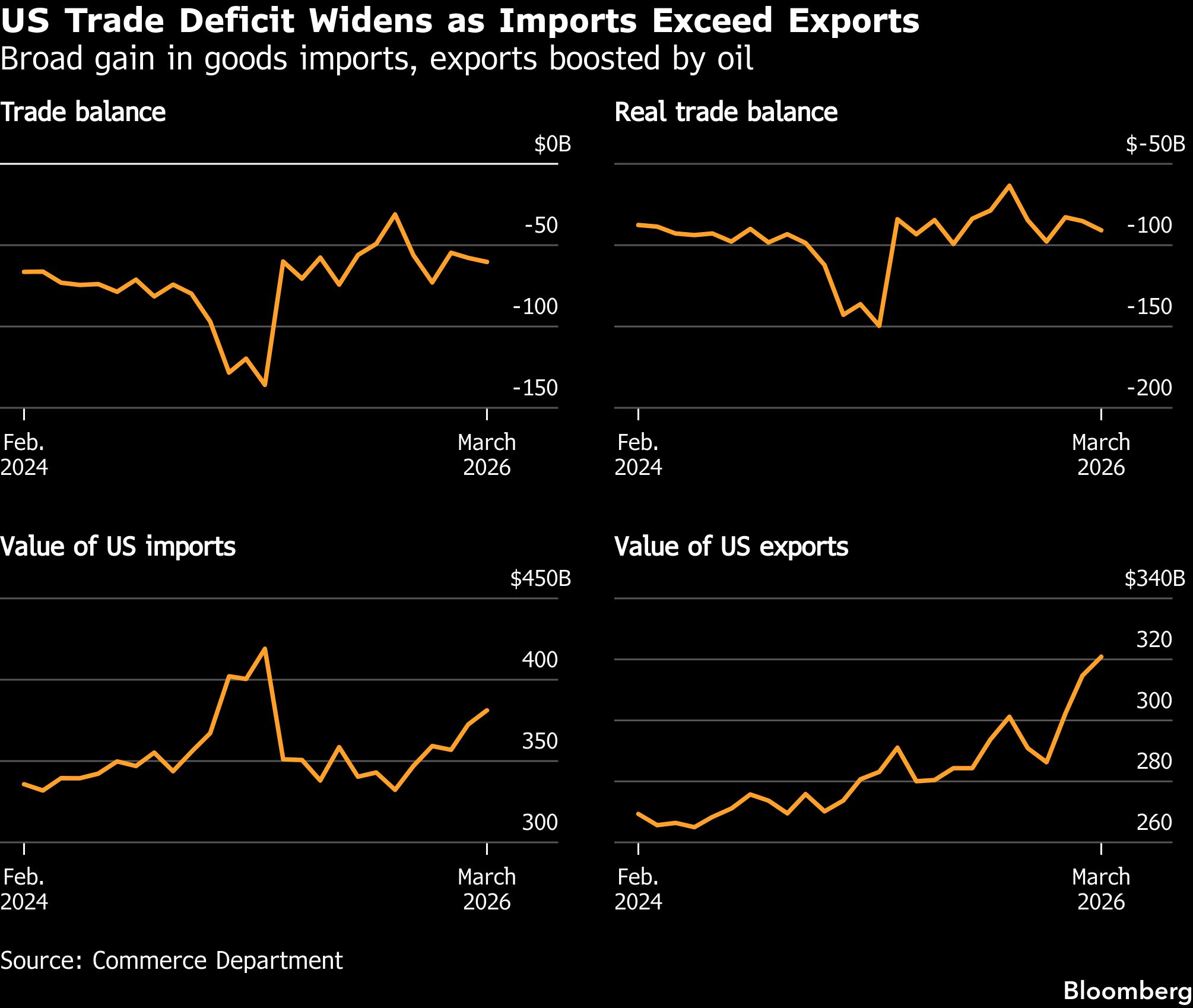
The U.S. trade deficit widened in March as an increase in the value of imports exceeded exports in a sign of solid consumer and business demand. The gap in goods and services trade grew 4.4 percent from the prior month, to $60.3 billion, Commerce Department data showed today. The median estimate in a Bloomberg survey of economists called for a $61 billion deficit.
The value of imports rose 2.3 percent, reflecting a rise in inbound shipments of motor vehicles and consumer goods. Imports of capital goods also rose to a record as the buildout of artificial intelligence (AI) data centers boosted demand for foreign-made computer equipment. The figures aren't adjusted for price changes.
Meanwhile, exports increased 2 percent in March from the prior month, helped by a record level of shipments of industrial supplies like oil and other petroleum products. Exports of foods, feeds, and beverages were the strongest since 2022. Consumer goods shipments declined.
The March figures wrap up a quarter in which net exports weighed on gross domestic product (GDP) by the most in a year. The war in Iran and effective closure of the Strait of Hormuz, a chokepoint for about a fifth of the world's oil shipments, represents another challenge to global trade that companies have to navigate. This disruption comes after trade flows experienced large monthly swings last year as U.S. importers reacted to a slew of ever-changing tariff announcements from President Donald Trump.
The American oil and gas industry stands to benefit from the export of higher-priced crude. Data from the Energy Information Administration shows U.S. exports of crude oil rose to a record recently. The price of Brent crude, the global benchmark, has increased more than 50 percent since the war started on February 28.
On an inflation-adjusted basis, the merchandise trade deficit widened to $90.8 billion in March. The trade data showed the United States posted the largest petroleum surplus on record, after adjusting for prices. On a bilateral basis, the U.S. merchandise trade deficit with China widened for a third month. The shortfalls with Canada and Vietnam grew. The U.S. gap with Mexico narrowed slightly.
Copyright 2026 Bloomberg. All rights reserved. This material may not be published, broadcast, rewritten, or redistributed.
© Arc, All Rights Reserved. Request academic re-use from www.copyright.com. All other uses, submit a request to TMSalesOperations@arc-network.com. For more information visit Asset & Logo Licensing.