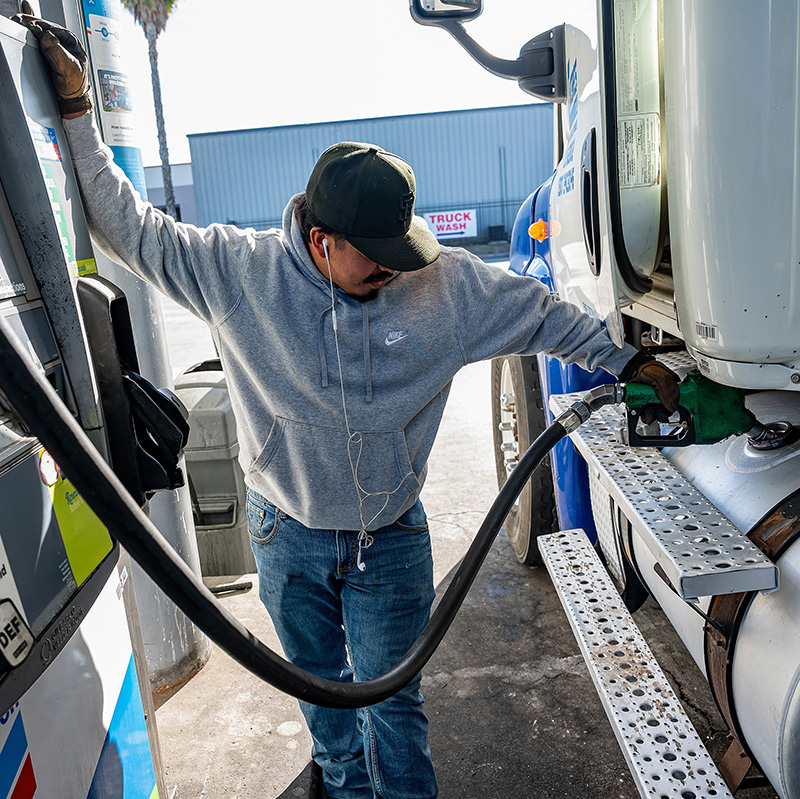
 A driver refuels a tractor trailer at a truck stop in Tracy, California. Photographer: David Paul Morris/Bloomberg
U.S. inflation accelerated in April on rising gasoline and grocery costs, exceeding wage growth in a double-whammy for already strained consumers. The consumer price index (CPI) rose 3.8 percent from a year earlier—the most since 2023—according to Bureau of Labor Statistics (BLS) data out today. After adjusting for inflation, wages fell for the first time in three years.

The figures show how the impact of the Iran war is hitting the U.S. economy as energy costs surge. The BLS report indicated gas prices rose almost 28 percent over the past two months. Grocery prices, rents, and airfares also saw large increases from a month earlier. A sustained pickup, especially in the cost of essentials, could lead consumers to cut back on spending.
"Inflation, which we thought was under control, is re-accelerating, and that's a real problem," said Gus Faucher, chief economist at PNC Financial Services Group. "The longer inflation remains elevated, the more stress that's going to place on consumers."
Even if the current ceasefire in the Iran war holds and the Strait of Hormuz reopens soon, economists anticipate higher costs are likely to persist in the months ahead as oil output normalizes and shipping flows recover. Rising prices for fertilizer are expected to result in higher grocery bills, and elevated oil prices could make other goods and services more expensive as well, as companies seek to pass rising transport costs on to consumers.
One of the main examples in the April CPI data was airfares: They rose 2.8 percent from a month earlier as the surging cost of jet fuel prompted airlines to raise prices and baggage fees and cut capacity. Overall services costs excluding energy and housing rose 0.5 percent, according to data compiled by Bloomberg. Hotel prices rose 2.8 percent, the most since 2024.
The overall CPI advanced 0.6 percent from March to April. Grocery prices rose 0.7 percent, the most in almost four years. Meats, dairy, fresh fruits, and vegetables all posted notable gains. Food prices have been a major contributor to affordability concerns in recent years and could play into Americans' views of the economy heading into midterm elections.
A separate report out today that combines the inflation figures with recent wage data showed that real average hourly earnings fell 0.3 percent from the year before, marking the first drop in three years.
The core CPI, which excludes food and energy, increased 0.4 percent from a month earlier and 2.8 percent from a year earlier, boosted in part by a statistical quirk in the report's measure of rents resulting from the 2025 government shutdown. Shelter costs were up 0.6 percent in April, the most in more than two years.
The rent measures are based on rolling samples of rental housing units collected every six months, and the BLS effectively left them unchanged in October because it wasn't able to collect data during the shutdown. When those units were priced again in April, they captured a year of increases rather than six months' worth, making the monthly change in rents look about twice as large as normal.
.What Bloomberg economists say..."Consumers are pulling back on other purchases to pay for costlier gasoline, and businesses don't have enough pricing power to raise prices. As a result, there's an undercurrent of coolness in the core CPI—and we think that's the more important signal for the trajectory of CPI over the next six months."— Anna Wong & Troy Durie |
Meanwhile, so-called core goods prices, excluding food and energy, were unchanged thanks to a slump in prices for new vehicles. Economists have been watching for signs that retailers have finished passing on the higher costs from President Donald Trump's tariffs, even as the risk that higher fuel prices might start pushing goods prices up again looms for later in the year. Prices in some categories that are more exposed to tariffs—including apparel and toys—rose at a more moderate pace than in March. Used-car prices were flat.
With the U.S. labor market holding up, Federal Reserve officials are closely tracking the impact the war will have on prices. Investors see little chance of another interest rate cut in 2026, according to futures, though some economists are still forecasting a reduction later in the year.
The Fed's preferred measure of inflation, based on the personal consumption expenditures (PCE) price index, doesn't put as much weight on shelter as the CPI does. A government report on producer prices due tomorrow will offer insights on additional categories—including a measure of airfares—that feed directly into the PCE, which is scheduled for release later this month.
————————————————————
Copyright 2026 Bloomberg. All rights reserved. This material may not be published, broadcast, rewritten, or redistributed.
© Arc, All Rights Reserved. Request academic re-use from www.copyright.com. All other uses, submit a request to TMSalesOperations@arc-network.com. For more information visit Asset & Logo Licensing.