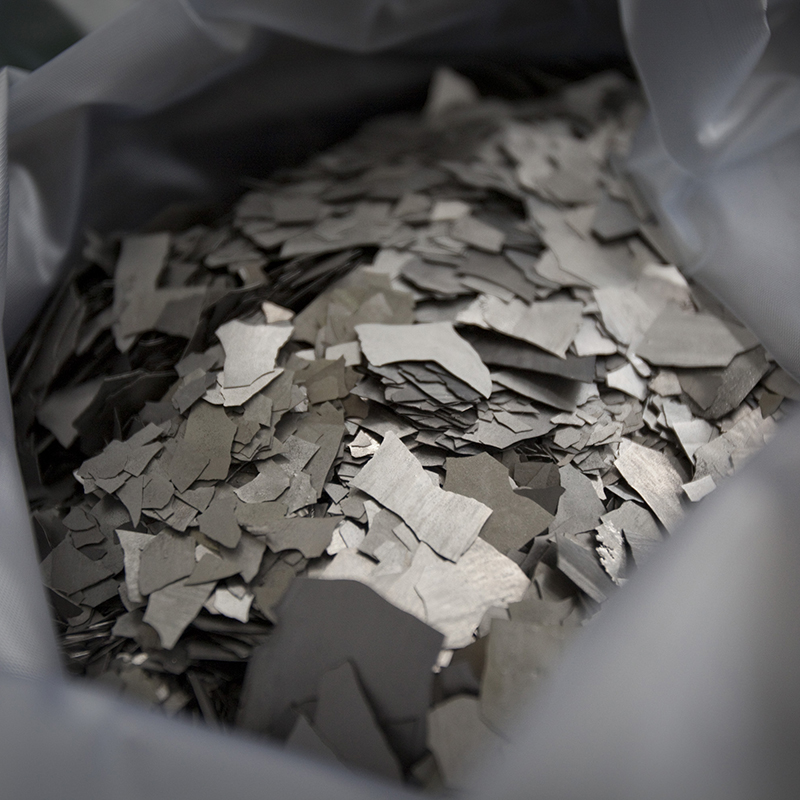
 Photographer: Nelson Ching/Bloomberg
China has imposed export controls against two U.S. rare-earth producers that are part of Washington's effort to reduce its dependence on Beijing by establishing an alternative supply chain for the critical minerals. MP Materials Corp. and USA Rare Earth Inc. have been added to China's export control list to "safeguard national security and interests," the Commerce Ministry said in a statement today. The curbs are mostly symbolic, as both companies say they have largely cut off supplies of equipment and materials from China.
The decision ends a months-long lull in China's use of such restrictions against U.S. companies following last October's summit between Donald Trump and Xi Jinping. In a separate statement, the Commerce Ministry said the move was in response to the Pentagon's decision this month to add some of China's biggest companies to a roster of firms it accuses of supporting the Chinese military.
Effective immediately, China's designation prohibits these U.S. companies from accessing items that can be used for both commercial and military purposes. The order also bans organizations and individuals around the world from transferring or providing them with dual-use items originating in China, effectively extending the scope of export controls beyond Chinese borders. As part of the announcement, the ministry also placed eight other U.S. companies, including drone makers and robotics and aerospace firms, on its export control list.
MP Materials operates the only major rare-earths mine in America. It's the linchpin of the Trump administration's push to build a domestic supply chain for rare earths and magnets, which are crucial to advanced manufacturing and defense. Last year, the company got a $400 million equity investment from the Department of Defense.
USA Rare Earth is an emerging producer of rare earths, having earlier this month confirmed $1.6 billion in funding from the U.S. Department of Commerce. It's also agreed to buy Brazil's Serra Verde Group for access to mines in the Latin American nation.
Both companies have been building up their capacity over the past year, as the U.S. races to boost production of rare earths and magnets on domestic soil following a trade standoff with China in 2025. Last year, Beijing used its control of rare-earth supplies to retaliate against Trump's tariffs by restricting exports, exposing supply vulnerabilities, and disrupting production from the U.S. to Europe.
The latest decision by Beijing comes days after the Group of Seven (G-7) countries reached an agreement to cap imports of rare earths and permanent magnets from any single country outside the bloc and its partners to below 60 percent by 2030, in an effort to reduce their reliance on China.
The move is "serious, expected, and calibrated," said Craig Singleton, a director at Foundation for Defense of Democracies, a D.C.–based research institute. It shows that "Beijing will answer U.S. technology and defense designations with targeted punishment, and it confirms that rare-earth dependence remains one of China's most usable tools of economic coercion."
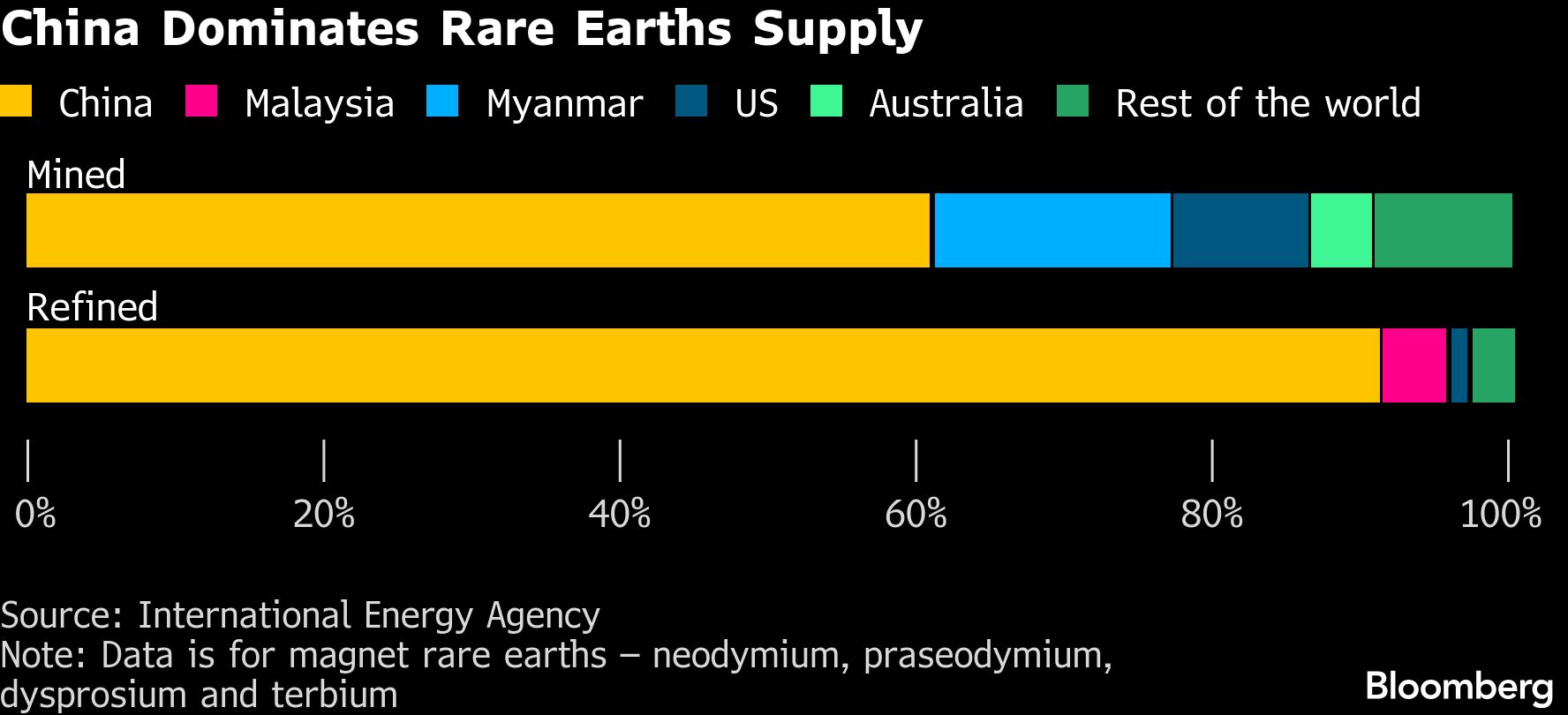
China accounts for around 60 percent of global mined production of rare earths used in permanent magnets that are integral to making everything from iPhones and electric vehicles to fighter jets and missiles, according to the International Energy Agency. Its dominance is even starker in midstream and downstream segments, accounting for more than 90 percent of the refining process and almost 95 percent of permanent magnet production, the IEA said.
————————————————————
Copyright 2026 Bloomberg. All rights reserved. This material may not be published, broadcast, rewritten, or redistributed.
© Arc, All Rights Reserved. Request academic re-use from www.copyright.com. All other uses, submit a request to TMSalesOperations@arc-network.com. For more information visit Asset & Logo Licensing.