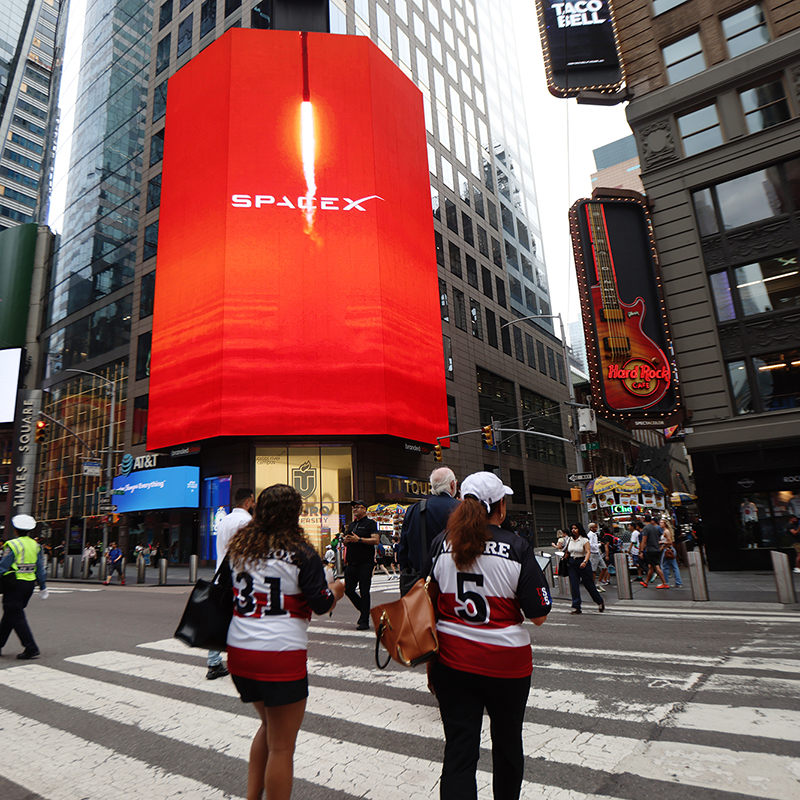
 SpaceX signage during the company's IPO at the Nasdaq MarketSite in New York on June 12. Photographer: Michael Nagle/Bloomberg
Credit-rating firms said SpaceX is a solid investment-grade company. The bond market is taking a more cautious view. A round of SpaceX bonds maturing in 2036—part of a $25 billion fundraising—priced at a premium of 1.4 percentage points above Treasuries. That's roughly 0.4 percentage point wider than the average spread on other similarly rated debt in the BBB tier, according to a Bloomberg index.
The spread underscores how Elon Musk's rocket, satellite, and artificial intelligence (AI) conglomerate faced a more skeptical audience in its debut bond sale after it met with plenty of fanfare when it made history this month with the biggest-ever initial public offering (IPO).
The SpaceX bonds paid enough yield to whet investors' appetite. Almost $90 billion of orders poured in at the offering's peak, a figure that fell to $73 billion by the time the deal priced, said people familiar with the matter, who requested anonymity because they're not authorized to speak publicly. The final order book, at less than three times the amount of debt offered, was below the average this year of about four times for high-grade deals, data compiled by Bloomberg show.

The greatest demand was for the deal's shortest-dated, and thus least risky, tranche, separate people with knowledge of the deal said. That tilt and the premium the company is paying likely reflect concerns about SpaceX's cash flow. The firm is burning through money—and, according to S&P Global Ratings, it will likely continue to do so through 2030, with the burn rate rising sharply next year. SpaceX's revenue is expected to grow, but its spending is projected to swell even faster.
"The equity market owns the upside, bondholders don't," said Grant Nachman, founder and chief investment officer of Shorecliff Asset Management Co. "So you have to get paid for the risk. That's why a company can be worth trillions, yet still need to pay meaningful spread to access debt capital markets."
Bond investors may also see less urgency to pile into the debt now as SpaceX is expected to borrow billions of dollars more in the debt market in the coming years.

SpaceX has lofty ambitions. It's building up its globe-spanning satellite network, bolstering its AI business, and even aims to send data centers into space, in addition to its rocket-launching business. Fixed-income investors may have little to gain from these moonshot projects: However well the company does, they often won't get more than their interest payments and their principal repayments.
It's a stark contrast from equity investors, who can see huge gains from the best possible scenarios, making some more willing to take risk and put their faith in Musk, the company's founder, given the potential upside. Even in equity markets, however, after an initial surge following the listing, some of the excitement has faded over the past few days. SpaceX's shares rose slightly today, following a three-day selloff that wiped more than $600 billion from its market value.
Still, bondholders see reason to have faith in SpaceX. The company had more than $100 billion of cash on its books as of June 19. It aims to maintain high-grade ratings and can take steps like cutting back on investments to protect its grades if it has to, ratings companies have said. It can also raise more equity if it has to.
"Is it a 'trust me' story? I think it is," said Brett Kozlowski, a portfolio manager at GW&K Investment Management. Even if Musk and the company itself perform well, "it doesn't take away from the noise that we're going to have to deal with in headlines and such."
However debt investors have also been singed by their enthusiasm for tech-bond sales recently, which may also make them more circumspect now. Chipmaking giant Nvidia Corp. sold $25 billion of high-grade bonds last week, attracting as much as $85 billion of orders for its first offering since 2021. The debt is generally trading slightly weaker relative to Treasuries.
————————————————————
Copyright 2026 Bloomberg. All rights reserved. This material may not be published, broadcast, rewritten, or redistributed.
© Arc, All Rights Reserved. Request academic re-use from www.copyright.com. All other uses, submit a request to TMSalesOperations@arc-network.com. For more information visit Asset & Logo Licensing.