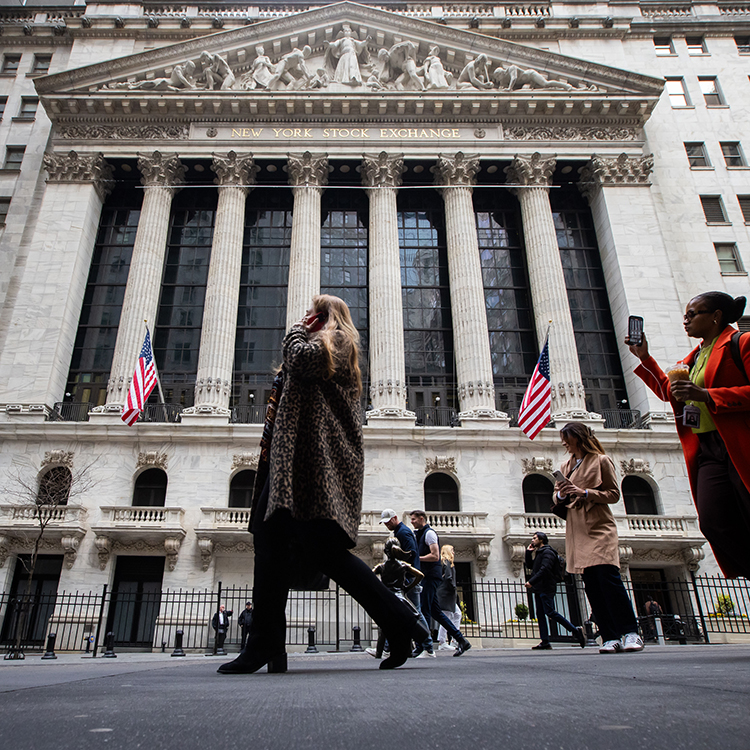
 The New York Stock Exchange.
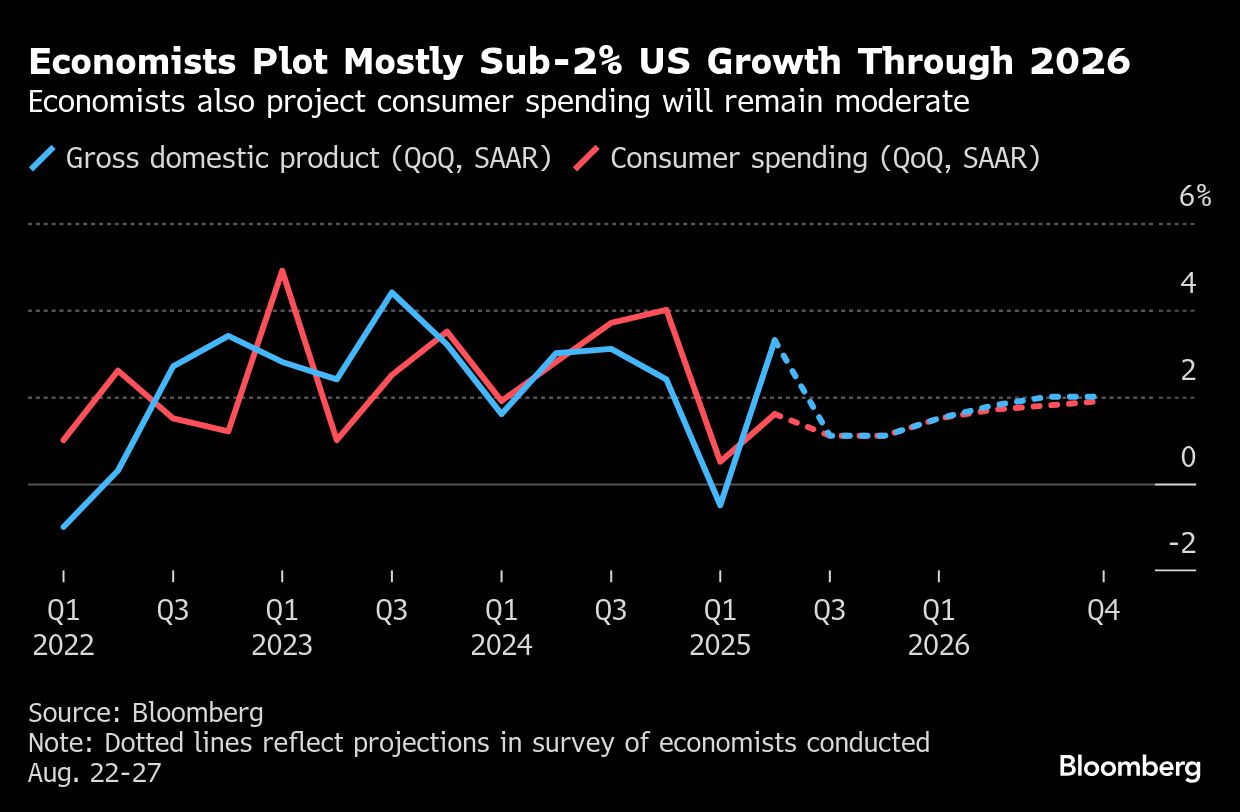
Economists anticipate ho-hum U.S. economic growth for the remainder of the year and well into 2026, with steady, tariff-driven inflation buffeting consumers.
In the survey conducted August 22 to 27, the 79 economist respondents said they now expect gross domestic product (GDP) to grow 1.1 percent in the second half of this year, a downshift from average growth of 1.4 percent during the first six months of 2025, according to the latest Bloomberg monthly survey of economists. They also see consumer spending, the economy’s primary growth engine, expanding at a 1.1 percent pace in both the third and fourth quarters.
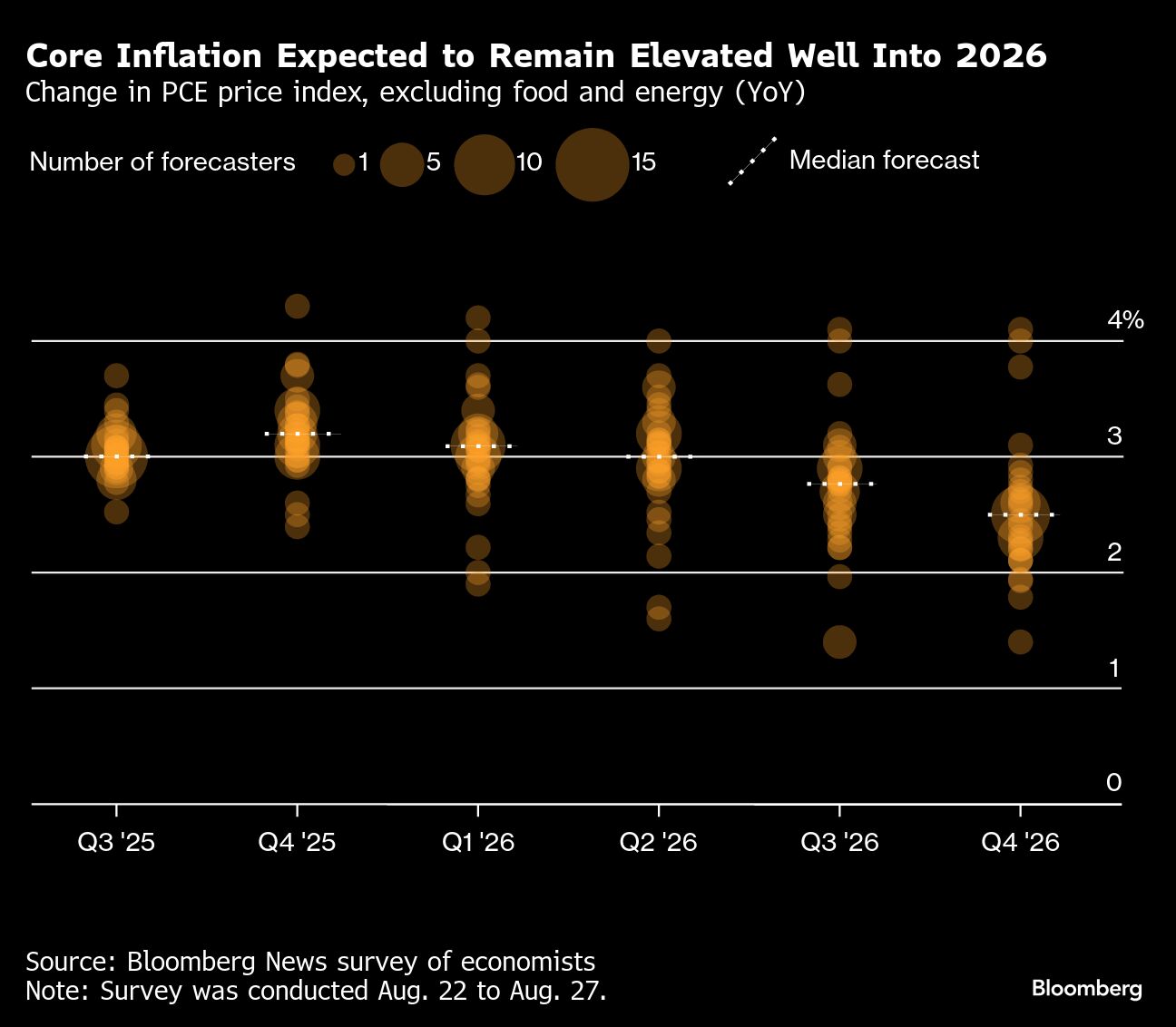
At the same time, the economists expect core inflation—measured by the personal consumption expenditures (PCE) price index—to top out at an average of 3.2 percent in the fourth quarter. Although they predict that year-over-year inflation will gradually ease, they think it will remain above the Federal Reserve’s 2 percent target through the end of 2026.
These results underscore expectations that President Donald Trump’s higher import taxes will feed through more broadly into consumer prices and only dissipate gradually next year. They point to an economy that will continue to adjust to the effects of the president’s trade and investment policies, which he hopes will spark stronger growth. They also indicate that the Fed will remain challenged by stubborn price pressures and uninspiring economic activity.
Last week, Fed Chair Jerome Powell said the effects of higher tariffs on prices are “now clearly visible,” but he carefully opened the door to an interest rate cut in September given increasing risks that the job market could falter. Economists in the Bloomberg survey expect the unemployment rate to rise to 4.4 percent in the fourth quarter and stay there through most of 2026.
Still, forecasters now put the chance of a recession in the next 12 months at 32 percent, the lowest since March. While overall economic growth is expected to be modest, respondents see an acceleration in the growth of business investment through 2026.
The Bureau of Economic Analysis (BEA) reported yesterday that the U.S. economy expanded in the second quarter at a slightly faster pace than initially estimated, helped by a bigger increase in intellectual property products and business equipment.
————————————————————
Copyright 2025 Bloomberg. All rights reserved. This material may not be published, broadcast, rewritten, or redistributed.
© Arc, All Rights Reserved. Request academic re-use from www.copyright.com. All other uses, submit a request to TMSalesOperations@arc-network.com. For more information visit Asset & Logo Licensing.