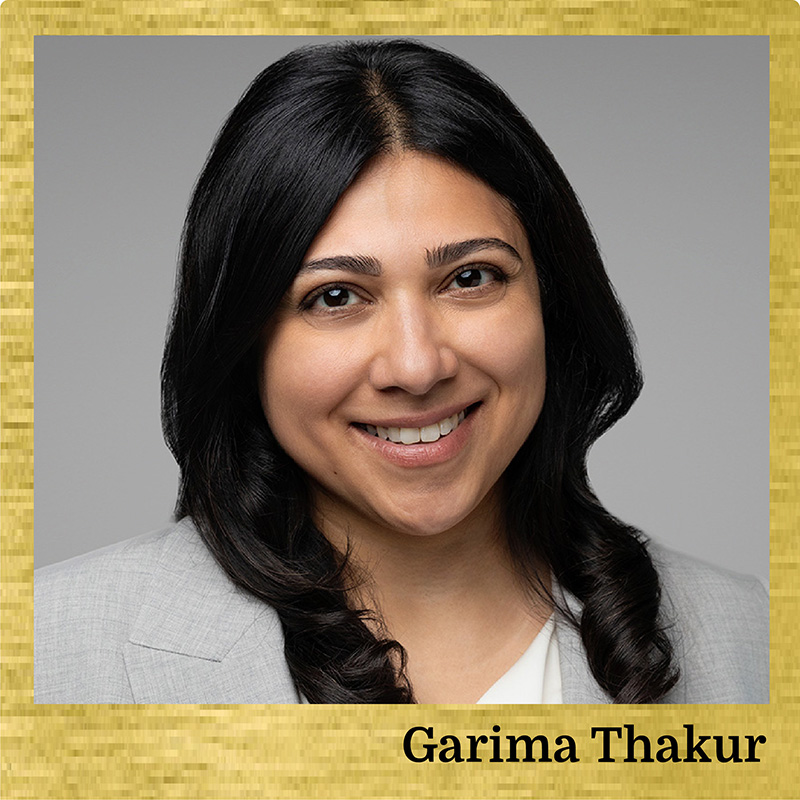
Los Angeles-based Creative Artists Agency (CAA) is a global entertainment and sports agency representing artists, athletes, brands, and entertainers. In its early days, CAA distributed typical treasury duties among other functions such as accounting, financial planning and analysis (FP&A), and legal. When the company started to grow through mergers and acquisitions (M&A) and faced an impending change in majority ownership, CAA’s management team knew it was time to build a standalone treasury and risk function.
“We had a couple of larger M&A deals in the pipeline,” says Garima Thakur, CAA’s global treasurer. “They brought me on board, and in the four years since, our treasury team has continued to expand.”

The first step in building an effective corporate treasury was to consider which activities the team should handle. Thakur believes that treasury activities typically fall into three buckets: Treasury operations includes responsibilities that clearly fit within treasury’s domain, such as cash management, bank account management, and payments. Strategic treasury covers responsibilities around debt capital markets, corporate finance, and lender relations. And the third bucket, risk management, includes insurance, business continuity planning, and holistic risk management.
“My initial goal at CAA was to bring the bread-and-butter treasury operations into our new function, as well as the areas where I saw the greatest risk,” she says. “I knew better than to come in and start making changes before I understood the business, but I started with high-risk activities like payment processes. Then, as I better understood other treasury-related workflows at CAA—and began to get the resources to handle those processes within treasury—I was able to start pulling them into treasury’s portfolio of responsibilities and improving controls.”
Centralization of foreign exchange (FX) was one example. “When we centralized all the company’s currency trades within treasury, we also implemented the industry standard of best execution, which means we get multiple quotes,” Thakur says. “Bloomberg makes that really easy. We just add our banks and see who’s quoting what and how that compares with the market.”
Another responsibility that Thakur’s team took over soon after being formed was debt management. “During 2023, Artemis stepped in as CAA’s majority shareholder,” Thakur says. “This change of ownership required a capital market transaction.” CAA has issued debt multiple times in the past four years, and the treasury group has placed interest rate hedges on the company’s outstanding debt.
The treasury team implemented a lightweight treasury management system to help streamline processes and improve their visibility to global cash flows. “We liked that the system was pretty plug-and-play,” Thakur says. “We just had to go through and set up the single sign-on and take some security steps, and the system was ready to go.” At the same time, Thakur’s team issued a request for proposals (RFP) for a new global banking partner and completed the transition to the new bank. They took their time setting up the U.S. accounts and are now implementing CAA’s international account structure.
Once they had their treasury management system in place, the treasury team built a consolidated cash position. “Previously, we would have to log into all our different banks’ portals, download balances, and pull them together to get a global view of cash,” Thakur says. Now her team can quickly consolidate cash information from entities across the company, regardless of the size of their cash balances.
Because the system provides better insights into FX trades, the team also considered whether they should hedge currency risk. “When we look at the idea of hedging from a consolidated financial perspective, we see a correlation of currency pairs in a way that creates some natural hedging,” Thakur explains. “We’re still in early days, but our high-level analysis has identified our biggest currency exposures, and we have a framework for refreshing that quarterly, so we can take hedging actions in the future if we need to.”
Perhaps the most interesting aspect of CAA’s treasury transformation has been the rapid pace of change external to treasury, even as the team has worked to establish their role in the company. “A new function has to focus a lot on fundamentals and developing processes, documenting procedures, etc. Those things take time,” Thakur says. “Meanwhile, we were also managing the day-to-day cash positioning and opening accounts and other core treasury processes.
“That was all quite ambitious,” she continues, “and we had multiple M&A transactions as well as new entities, new markets, and new technologies—such as digital wallets to facilitate NFT [nonfungible token] drops for clients who were asking for that. We needed to support these new initiatives without losing sight of setting the right fundamentals. My team is good at switching hats; as a growing company we’re going to continue to have incoming requests for new treasury capabilities to support the business.”
Throughout CAA’s treasury transformation, change management has been crucial. “Every time we were defining the scope of treasury, we looked at the change from the perspective of the person on the other side,” Thakur emphasizes. “Our primary focus was always being transparent and helping people see what each change would mean for them. Change management, nine times out of ten, is about managing the fear of the unknown. We were very careful to understand that fear, by listening to people, and then address the source of their anxiety.”
© Arc, All Rights Reserved. Request academic re-use from www.copyright.com. All other uses, submit a request to TMSalesOperations@arc-network.com. For more information visit Asset & Logo Licensing.