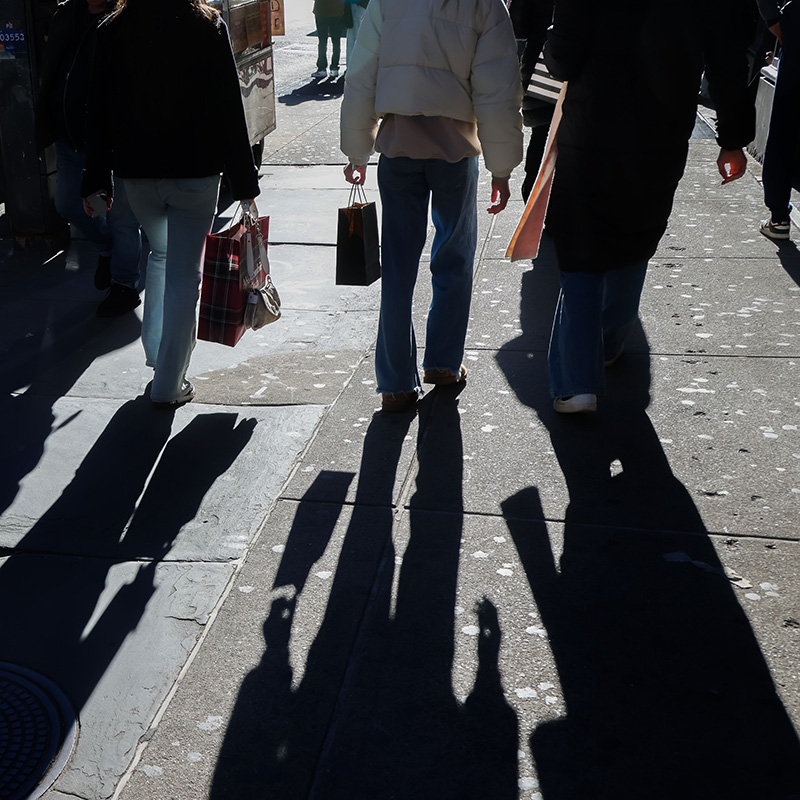
 Shoppers in the SoHo neighborhood of New York.
U.S. consumer confidence has declined to the lowest level in more than a decade, on more pessimistic views of the economy and labor market. The Conference Board's January gauge decreased to 84.5, from an upwardly revised 94.2 last month, data out today show. The figure is the lowest since May 2014 and falls short of all estimates in a Bloomberg survey of economists.
Moreover, a measure of expectations for the next six months fell to the lowest since April, while a gauge of present conditions dropped to the lowest in nearly five years.
"The expectations index has greatly overstated the weakness in spending in recent quarters," Oliver Allen, senior U.S. economist at Pantheon Macroeconomics, said in a note. "But we'd be surprised if its recent deterioration proves to be an entirely false signal, particularly given the recent stagnation in real incomes and the already rock-bottom personal saving rate."
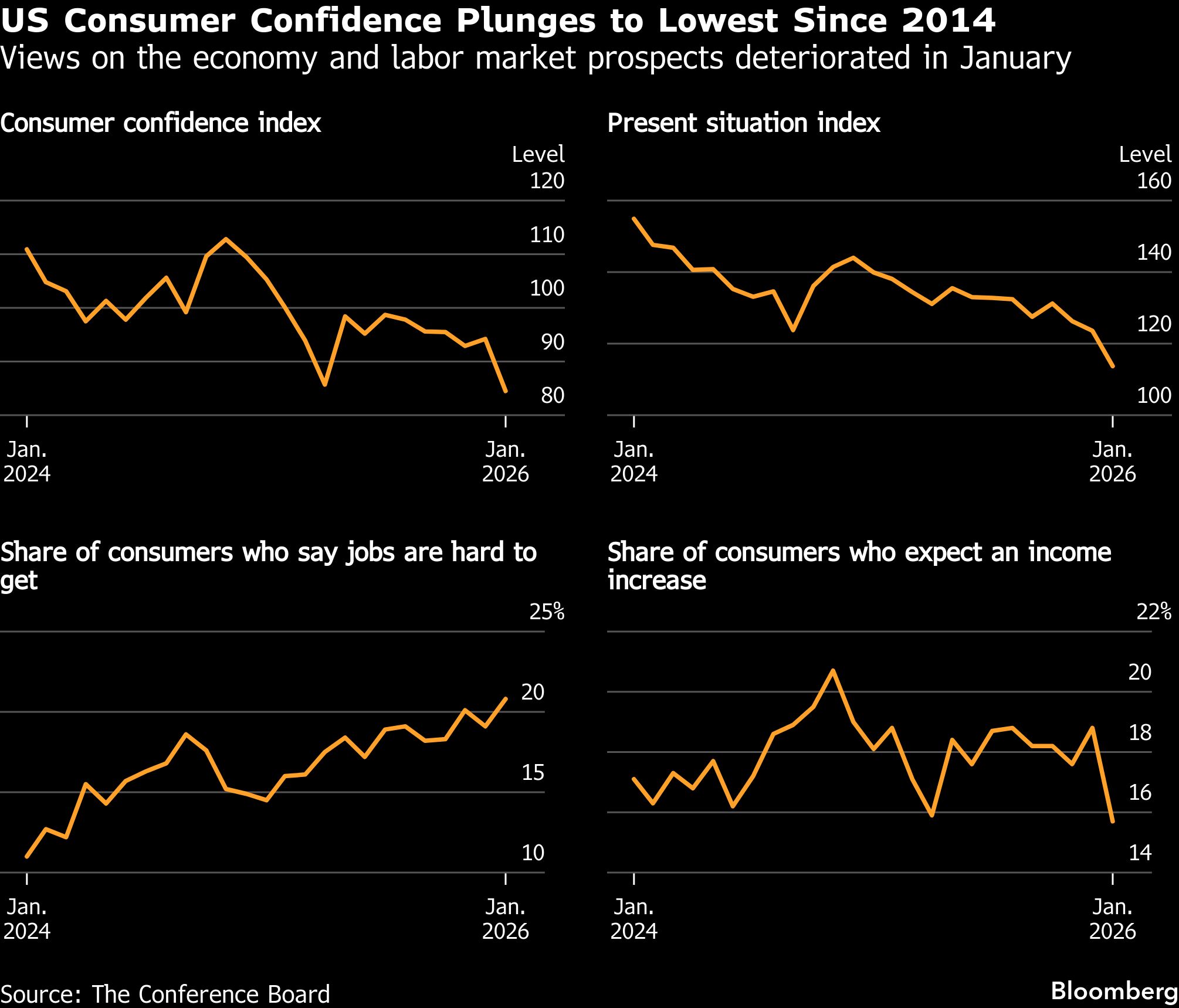
After a slight improvement in December, confidence resumed its downward slide amid concerns about high prices and sluggish job growth. Economists project that the labor market will largely remain stagnant this year, with limited job opportunities, though they don't anticipate widespread layoffs.
In write-in responses to the survey, consumers often mentioned prices of oil, gas, and groceries, Dana Peterson, chief economist at the Conference Board, said in a statement. Mentions of politics, the labor market, and health insurance also rose, she said. An increasing number of respondents also brought up war in the write-ins. Geopolitical tensions over Venezuela, Iran, and Greenland flared at the start of the year, and the cutoff for the survey was January 16.
.What Bloomberg economists say..."Spending has remained resilient, and upcoming tax refunds should further support household purchasing power. That makes us think the decline in confidence is overdone and will rebound soon."— Eliza Winger |
The share of consumers who said jobs are currently hard to get was the highest since February 2021, while the share saying jobs are plentiful deteriorated. The difference between these two—a metric closely followed by economists to gauge the job market—narrowed to the worst reading in years.
In addition, fewer Americans expect their incomes to rise in the coming months. That's prompting consumers to cut back on vacation plans and approach big-ticket purchases like new cars and certain appliances more cautiously.
Confidence declined broadly by age and household income. Sentiment for workers between the ages of 35 and 54, and for those earning more than $50,000 a year, plunged to some of the lowest levels since 2013.
The Conference Board's index generally focuses on labor market conditions, whereas a separate metric of consumer sentiment from the University of Michigan emphasizes views about personal finances and the cost of living. The university's gauge increased to a five-month high in January as Americans were more optimistic about the economy and their finances.
—————————————————————
Copyright 2026 Bloomberg. All rights reserved. This material may not be published, broadcast, rewritten, or redistributed.
© Arc, All Rights Reserved. Request academic re-use from www.copyright.com. All other uses, submit a request to TMSalesOperations@arc-network.com. For more information visit Asset & Logo Licensing.