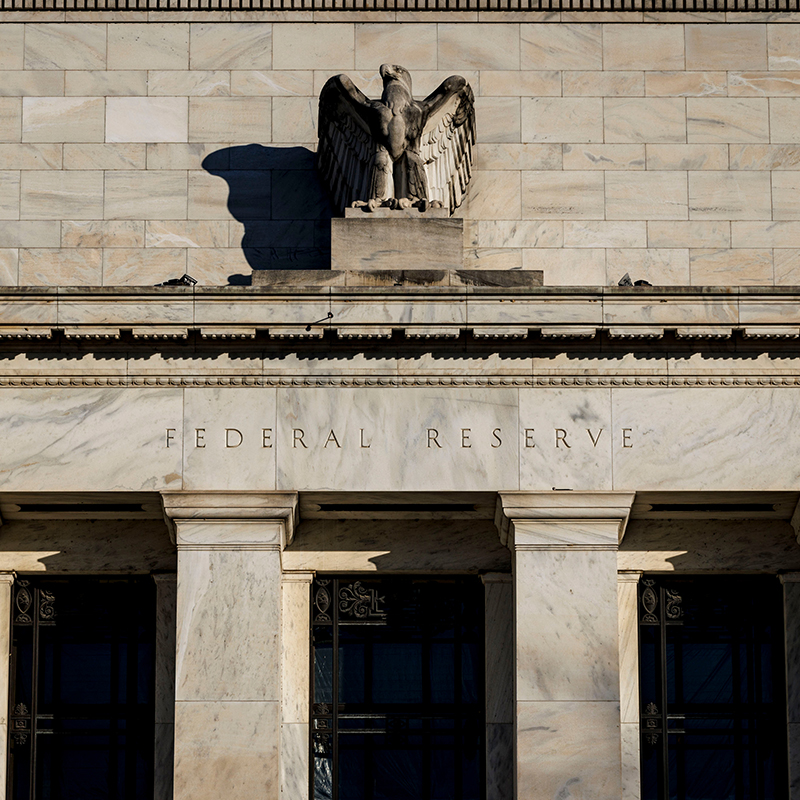
 The Marriner S. Eccles Federal Reserve building in Washington.
Unexpectedly strong employment data for January reduces the chances the Federal Reserve will see a need to cut interest rates again by midyear, as the most concerning possibilities for the trajectory of the labor market seem more remote.
Worries about rising unemployment, which prompted three rate cuts at the end of 2025 before a pause in January, were likely eased by numbers out yesterday showing 130,000 jobs were added last month and unemployment fell to 4.3 percent.
Fed officials at last month's policy meeting had already cited signs of stabilization as a reason to hold rates steady. Yesterday's report from the Bureau of Labor Statistics (BLS) prompted traders to pare back the probability of a rate cut at the June meeting—previously eyed as the most likely timing of the next reduction—to under 50 percent.
"It absolutely complicates the argument for lower rates," said Tim Mahedy, a former senior adviser at the Federal Reserve Bank of San Francisco. "The January data were really strong."
Economists cautioned that the upbeat January numbers could yet be revised lower, and that hiring continues to be dominated by a handful of sectors, primarily healthcare. Revisions to last year's data showed job gains averaged just 15,000 a month, down from the initially reported 49,000 pace.
Yet the bounce in January will calm fears that unemployment was set to keep climbing amid worries over the impact of artificial intelligence (AI) and widespread concerns that companies were putting hiring plans on hold, said Stephen Stanley, chief U.S. economist at Santander U.S. Capital Markets LLC.
"The health of the January numbers certainly should put a nail in the coffin of the idea that the labor market is on the cusp of falling apart, which is what we were hearing a lot from some of the doves of the Fed," Stanley said.
Kansas City Fed President Jeff Schmid, speaking Wednesday, said the central bank needs to keep rates at restrictive levels to continue putting downward pressure on inflation, and added that he's not seeing many indications of restraint in the economic data.
President Donald Trump continued calling for more rate cuts. In a social media post after the jobs data was released, Trump hailed the "GREAT JOBS NUMBERS" and said the United States should be paying the lowest interest rates globally.
Trump's National Economic Council director, Kevin Hassett, told the Fox Business Network there is "plenty of room for the Fed to cut rates," citing a big supply shock from AI that will boost growth without creating inflation. Kevin Warsh, whom Trump has said he will nominate to take over as Fed chair after Jerome Powell's term ends in May, has echoed those views.
.What Bloomberg economists say..."The January payrolls report lessens the urgency for the Fed to cut rates. But as we expect inflation to ease in coming months—in particular, we expect a more subdued reading on January CPI [consumer price index], due [tomorrow] than the consensus forecast—we think policymakers have room to cut rates to support the labor market recovery. In all, we expect the Fed to cut rates by 100 basis points this year."— Bloomberg economists led by Anna Wong |
Fed watchers cautioned that it's too soon to make calls on where the economy will be by June—when Warsh would chair his first policy meeting, if he is confirmed by then.
For now, key indicators are suggesting a firming labor market and broader economy, none of which immediately lend themselves to Warsh's calls for lower rates, said Stephanie Roth, chief economist at Wolfe Research. "It makes his job a little bit harder," she said.
——————————————————————
Copyright 2026 Bloomberg. All rights reserved. This material may not be published, broadcast, rewritten, or redistributed.
© Arc, All Rights Reserved. Request academic re-use from www.copyright.com. All other uses, submit a request to TMSalesOperations@arc-network.com. For more information visit Asset & Logo Licensing.