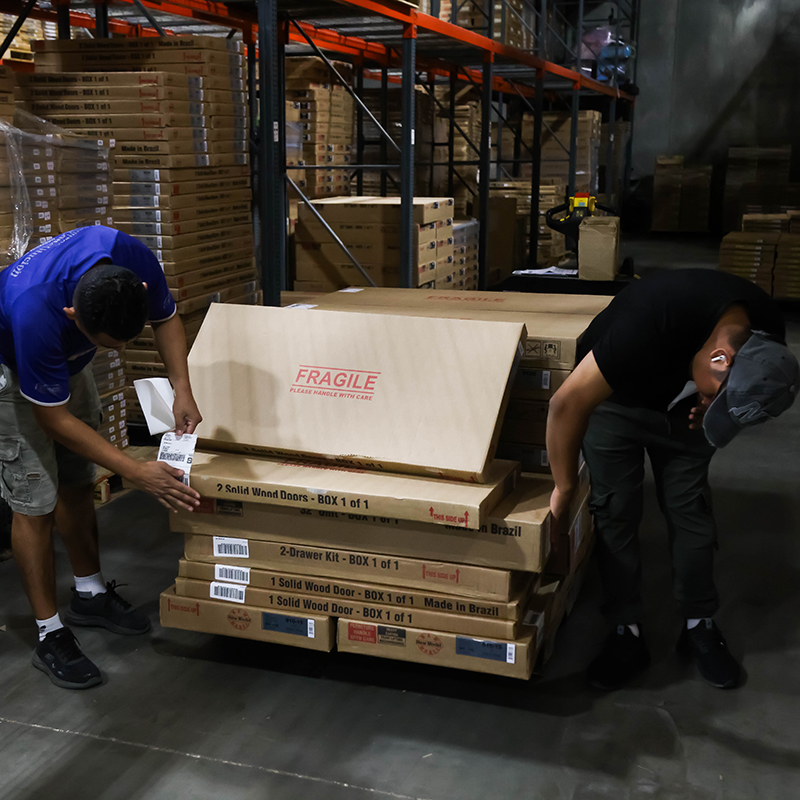
 Workers apply shipping labels to boxes at a warehouse in Linden, New Jersey. Photographer: Michael Nagle/Bloomberg
Prices paid to U.S. producers rose in January by more than forecast, fueled by services and pointing to lingering inflationary pressures. The producer price index (PPI) increased 0.5 percent, the most since September, after a revised 0.4 percent increase in December, according to a Bureau of Labor Statistics (BLS) report released today. An underlying gauge that excludes food and energy advanced by the most since July.
Consecutive months of firm wholesale-price readings add to evidence of slow progress toward beating inflation. Higher duties on imported materials have encouraged many producers to raise prices or find other cost savings to protect margins.

Economists and investors closely track the PPI because several of its components feed into the Federal Reserve's preferred inflation gauge, the personal consumption expenditures (PCE) price index.
Among those inputs used to compile the PCE price index, portfolio management costs, airfares, and physician care costs rose firmly. The Bureau of Economic Analysis (BEA) is scheduled to release January PCE price data, along with income and spending figures, on March 13.
| Metric | Actual | Estimate |
|---|---|---|
| PPI final demand (month-over-month) | +0.5% | +0.3% |
| PPI excluding food & energy (month-over-month) | +0.8% | +0.3% |
| PPI final demand (year-over-year) | +2.9% | +2.6% |
| PPI excluding food & energy (year-over-year) | +3.6% | +3.0% |
After the report, some economists bumped up their estimates of the core PCE price gauge to a 0.5 percent advance, which would be among the strongest in recent years. Others expect a firm, but more moderate, gain.
"This report validates the pivot of the FOMC [Federal Open Market Committee] away from labor market risks—we don't see any, but some in the markets remain fixated on the slowing payroll figures—back toward price stability," Carl Weinberg, chief economist at High Frequency Economics, said in a note.
Services costs increased by the most since July, including the largest pickup in margins in data back to 2009. This likely reflects companies passing along higher tariff-related costs at the start of the year. Margins were higher among wholesalers of professional and commercial equipment, as well as chemicals. They also rose at apparel and health-and-beauty retailers, according to the PPI report.
Goods prices fell, as gasoline and food costs declined sharply. Excluding food and energy, the January increase in goods prices was among the largest since early 2022. Categories such as engines, communications equipment, machine tools, and a variety of metals rose sharply.
A less-volatile PPI measure that excludes food, energy, and trade services increased a more moderate 0.3 percent for a third-straight month. Costs of processed goods for intermediate demand, which reflect prices earlier in the production pipeline, were unchanged for a second month. However, excluding food and energy, they rose firmly.
.What Bloomberg economists say...January's PPI came in hot as companies passed on price increases at the start of the year. Margins for wholesalers and retailers are recovering, suggesting they likely ate some of the tariff costs last year."— Troy Durie, economist |
While the Supreme Court last week struck down his sweeping global tariffs, President Donald Trump imposed a flat 10 percent levy on foreign goods for 150 days and is seeking trade investigations with the goal of enacting more permanent import duties.
As tariffs put upward pressure on producer prices, companies may extend those costs to consumers in coming months. Figures out earlier this month showed a fairly mild increase in the consumer price index (CPI) at the start of the year.
————————————————————
Copyright 2026 Bloomberg. All rights reserved. This material may not be published, broadcast, rewritten, or redistributed.
© Arc, All Rights Reserved. Request academic re-use from www.copyright.com. All other uses, submit a request to TMSalesOperations@arc-network.com. For more information visit Asset & Logo Licensing.