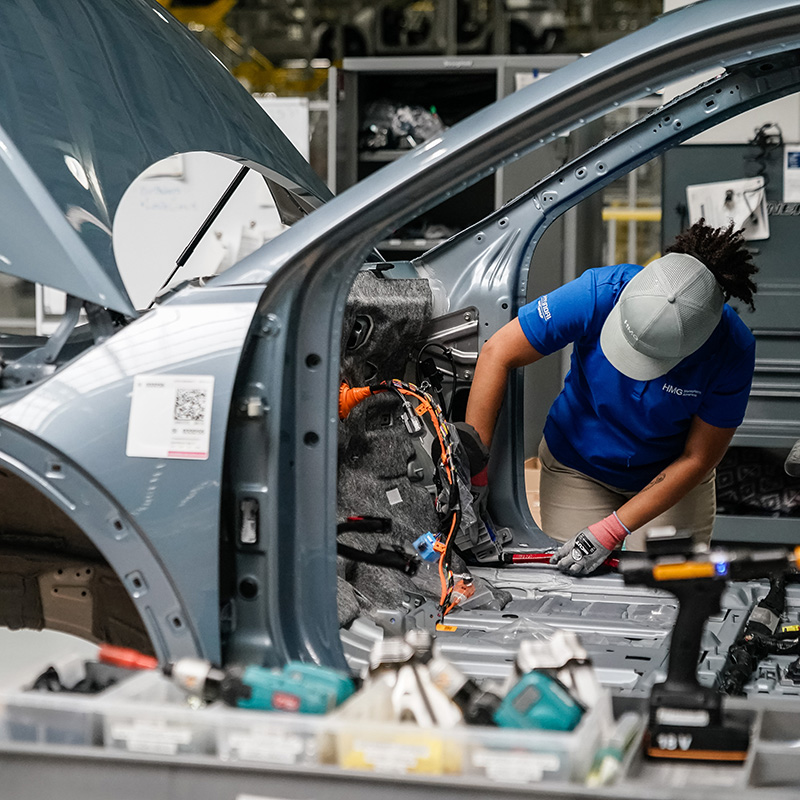
 A worker assembles vehicles on the production floor at the Hyundai Metaplant electric vehicle manufacturing facility in Ellabell, Georgia.
Hyundai Motor Co. plans to ramp up U.S. production and cut expenses to shield the South Korean carmaker from tariffs that are eating into profit in its biggest market. "Tariffs are hurting," CEO José Muñoz told reporters at an event in Milan on Monday. "In the short term, it is really tough."
Like the rest of the global auto industry, Hyundai has grappled with U.S. tariffs, along with supply disruptions and uneven demand for electric vehicles, since Muñoz took over as CEO at the start of 2025. The South Korean company reported its lowest quarterly profit in more than three years during the fourth quarter of 2025.
Increasing the number of cars Hyundai makes in the United States will avoid extra costs, Muñoz said. The company currently makes about half of U.S.–sold vehicles locally, importing the rest at an official tariff rate of 15 percent. "We need to make efforts to minimize the cost," he said. "One of the easiest and straightforward ways to do that is to accelerate localization." Muñoz cautioned that localization "takes years" and will force Hyundai to cut costs aggressively in the meantime, as well as to adjust prices to offset the immediate financial blow.
Muñoz has been pushing the premium Genesis brand, hybrids, and sport utility vehicles (SUVs) to capture higher-margin sales. The company has continued to gain ground in the U.S., which he has described as a pillar of growth. His comments underscore the intensifying pressure on global carmakers to overhaul their supply chains as trade barriers threaten margins.
The 60-year-old CEO said the war in Iran is creating a significant "hiccup" in the Middle East, Hyundai's highest-margin market. Both demand and logistics have been affected, forcing the company to shift more capacity to North America.
"We're trying to offset with other regions," he said. "Because we are a little bit limited on capacity, I can tell you that there are many volunteers now that try to get those cars. One of the regions that can accommodate is the North America region."
————————————————————
Copyright 2026 Bloomberg. All rights reserved. This material may not be published, broadcast, rewritten, or redistributed.
© Arc, All Rights Reserved. Request academic re-use from www.copyright.com. All other uses, submit a request to TMSalesOperations@arc-network.com. For more information visit Asset & Logo Licensing.