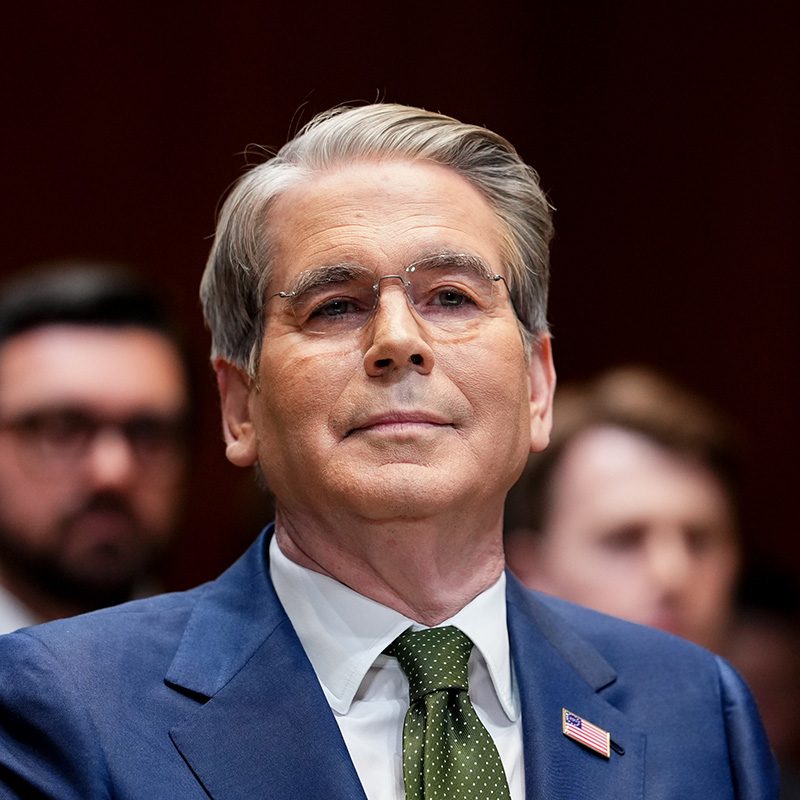
 Scott Bessent
Treasury Secretary Scott Bessent said today that many of the United States' Persian Gulf allies, along with a number of Asian nations, have requested foreign exchange (FX) swap lines with the U.S., and he pointed to the potential for such arrangements to support dollar-denominated lending overseas.
"Many of our Gulf allies have requested swap lines," Bessent said in answering questions at a Senate Appropriations subcommittee, a day after President Donald Trump confirmed that a currency swap with the oil-rich United Arab Emirates (UAE) was under consideration. "Numerous other countries, including some of our Asian allies, have also requested them."
The U.S.–Israeli war with Iran has led to the shutdown of vital energy flows from the Persian Gulf, putting strains on economies and financial systems around the world. Some American allies in the region have been targets of Iranian retaliation, while others in Asia have endured hits to their currencies.
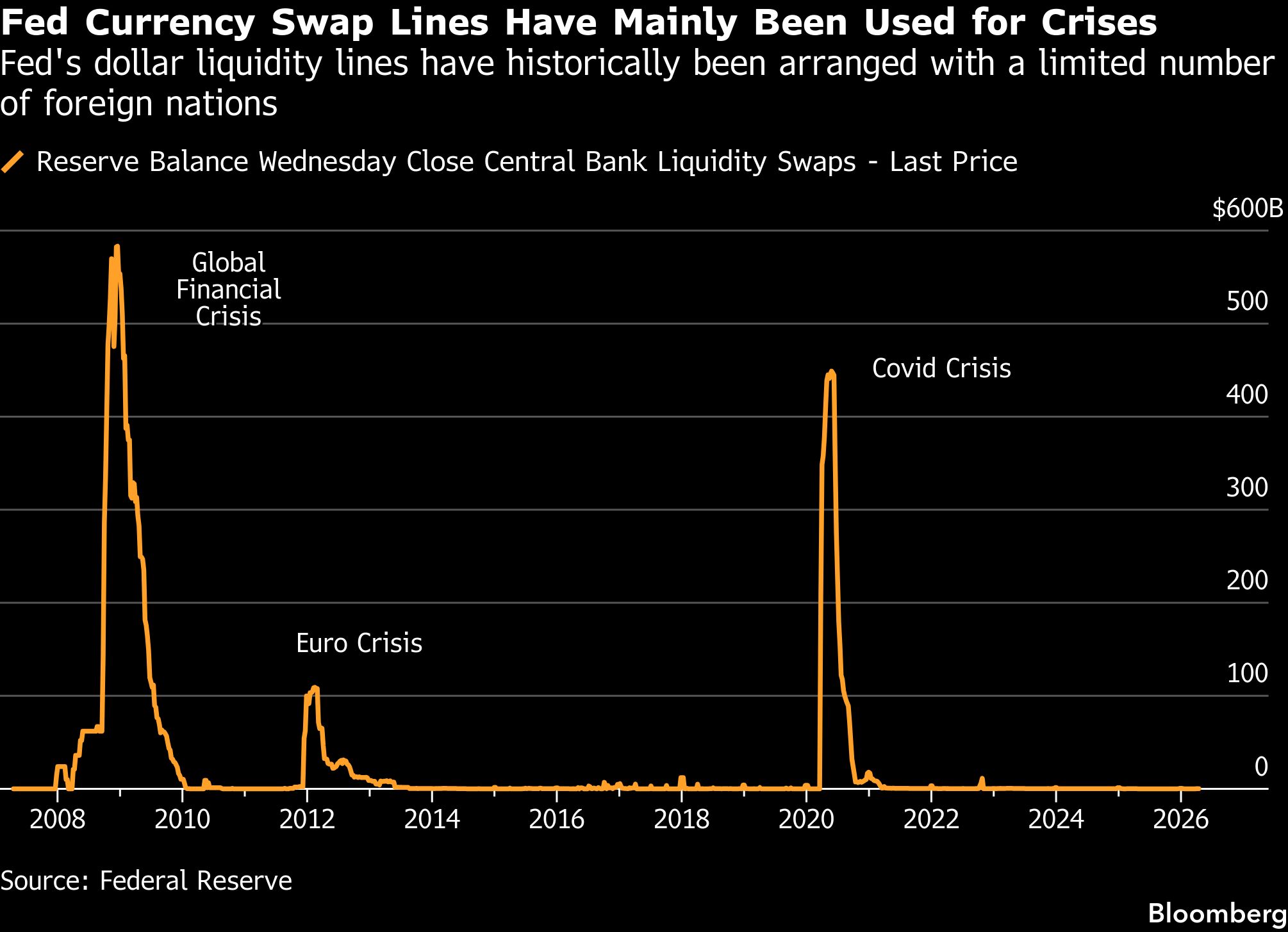
Traditionally set up between central banks, swap lines allow one nation to deploy the currency of another as needed to address liquidity demands in that other currency. The Federal Reserve maintains open lines with the European Central Bank, Bank of Japan, and a handful of other peers. Bessent last year pioneered using a Treasury fund to provide dollars to Argentina, helping the U.S.–friendly government there to prop up its currency before elections.
"Swap lines, whether it's from the Federal Reserve or the Treasury, are to maintain order in the dollar funding markets and to prevent the sale of the U.S. assets in a disorderly way," Bessent said.
A Fed spokesman earlier this week declined to comment on the UAE swap line discussions. The UAE informally inquired about potential financial lifelines, including a currency swap, if the impact of the war worsens, people familiar with the matter previously told Bloomberg.
Beyond the UAE, Bessent didn't specify which nations had asked for new arrangements with the United States. But already last year he had been envisioning a potential build-out of swap lines as a means of supporting the dollar's global dominance.
In a July 2025 interview with Bloomberg, Bessent said that "locking in dollar supremacy" was one of his priorities as Treasury chief. "One of my goals is to create a big dollar funding market in the Middle East," he said. "Treasury can do swap lines just like the Fed—I think you're going to see us doing swap lines with a whole cohort of new countries that the Fed doesn't have swap lines with."
The UAE, Saudi Arabia, and a number of other wealthy Gulf nations peg their exchange rates to the dollar, making them tightly connected to the U.S. monetary system, and their oil sales have largely been denominated in the U.S. currency too. "We want to keep them on the peg and, obviously, they have a lot of excess dollars," Bessent said last July.
However, the Treasury Department's capacity to grant swap lines is limited relative to the Fed. While currency swaps didn't come up in Tuesday's Senate confirmation hearing for Kevin Warsh—Trump's pick to become the next U.S. central bank chief—the nominee did make generic comments about supporting Bessent's broader economic statecraft agenda.
"The Fed will play a supporting role in ensuring that the financial system is as safe as it can be and work with them, because it's outside of the conduct of monetary policy," Warsh said.
In the aftermath of the global financial crisis, South Korea pushed for a network of permanent central bank swap lines, but then–Fed Chair Ben Bernanke opposed expanded use of swaps as a "permanent service." More recently, South Korea—a key U.S. ally—has been concerned about excessive weakness in its own currency, and about funding a $350 billion investment deal with the Trump administration. Bessent in a social media post Sunday reiterated that he agreed with his Korean counterpart that excessive volatility in the won isn't desirable.
Among nations that are active in issuing dollar-denominated debt is Indonesia, which has been struggling with a tumbling local currency—something that, in turn, makes it costlier to service offshore borrowing. The central bank has ramped up intervention in response, sending FX reserves to a two-year low, while also lifting yields on rupiah securities to attract foreign funds and stabilize the currency. Bank Indonesia Governor Perry Warjiyo earlier today outlined a challenging external environment in which a flight to safety is sending capital to havens, with higher U.S. Treasury yields pressuring emerging-market currencies like the rupiah.
————————————————————
Copyright 2026 Bloomberg. All rights reserved. This material may not be published, broadcast, rewritten, or redistributed.
© Arc, All Rights Reserved. Request academic re-use from www.copyright.com. All other uses, submit a request to TMSalesOperations@arc-network.com. For more information visit Asset & Logo Licensing.