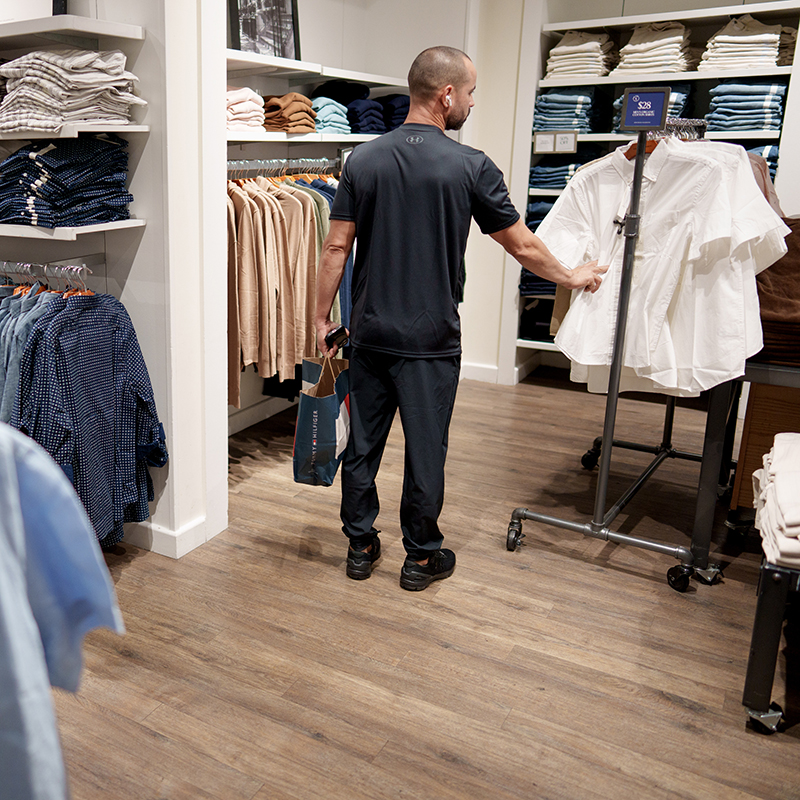
 A shopper browses clothing at a store in Los Angeles.
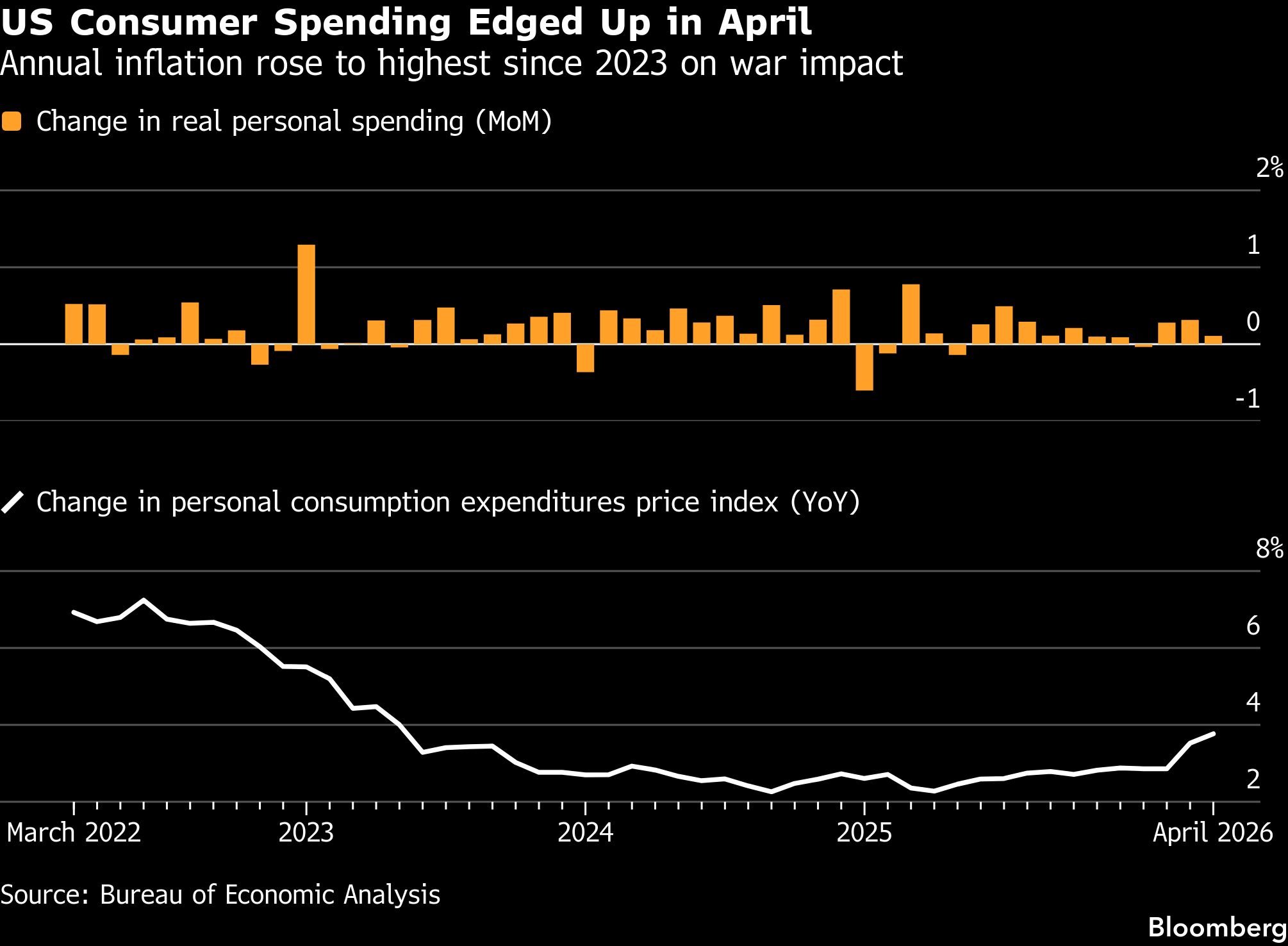
U.S. consumer spending increased slightly in April as war-driven inflation pressures sapped incomes and pushed the saving rate to an almost-four-year low. The personal consumption expenditures (PCE) price index rose 3.8 percent from a year earlier, the most since 2023, while inflation-adjusted consumer spending increased just 0.1 percent last month, according to a report from the Bureau of Economic Analysis (BEA) out yesterday. The so-called core PCE index, which excludes food and energy items, was up 3.3 percent from a year earlier.
The numbers suggest consumers are facing increasing pressures as uneven hiring trends and the rising cost of living erodes incomes and savings. The surge in prices for fuel and other materials sparked by the Middle East conflict is reverberating through the economy and has driven consumer sentiment to record lows.
The inflation figures, meanwhile, will likely reinforce warnings from some Federal Reserve officials that the U.S. central bank will need to consider raising interest rates if price pressures do not ebb. Kevin Warsh, who on May 22 was sworn in as President Donald Trump's new Fed chairman, will likely need to convince his new colleagues that rate hikes won't be necessary to keep inflation expectations in check.
Despite the acceleration in annual inflation, the closely watched monthly increase in the core PCE price index was 0.2 percent, slightly lower than expected. "Although the core rate was on the softer side of consensus, I would not take much solace from today's result, as core inflation is likely to be firmer next month and risks to the upside from the lagged impact of the energy surge remain in place," said Omair Sharif, president of Inflation Insights LLC.
Personal income, a metric which is not adjusted for inflation, was flat in April, while wages and salaries advanced 0.2 percent. Inflation-adjusted disposable income fell 0.5 percent, marking the third straight monthly decline. The saving rate dropped to 2.6 percent, the lowest since 2022.
Retailers including Walmart Inc. have warned that high fuel costs are squeezing their bottom lines and may soon begin to show up in prices of products on their shelves. Higher tax refunds have helped support consumer spending in recent months, though they've been partly offset by prices at the pump rising to the highest levels in nearly four years. Walmart CFO John David Rainey told Bloomberg News last week that high-income consumers are "spending with confidence in many categories," but low-income consumers are "more budget-conscious, trying to navigate certain financial distress."
Oil prices have come down this week, but Brent futures remain more than 30 percent higher than before the war began.
"While prices are rising faster than comfortable, incomes are not, putting consumers in an uncomfortable spot," said Elizabeth Renter, a senior economist at the personal finance website NerdWallet. "Rising prices, sluggish income, and economic uncertainty could set the stage for a broader pullback in consumer spending and therefore economic growth."
The report showed inflation-adjusted spending on so-called core goods fell 0.2 percent, while prices rose 0.3 percent. Inflation-adjusted services spending, meanwhile, rose 0.2 percent and prices climbed 0.3 percent. A closely watched metric of services inflation that excludes energy and housing was up just 0.1 percent.
In April, computer software and accessories prices rose 5 percent. Economists are increasingly paying attention to the category as the rapid data center buildout pushes up costs. From November to March, it made an "unprecedented" contribution to core inflation, according to a study published last week which was co-authored by former Fed Governor Stephen Miran.
What Bloomberg economists say..."Core inflation moderated slightly, though the Iran war kept headline price pressures elevated. However, real spending growth has continued to moderate as higher goods prices weigh on volumes. Overall, the April data suggest a resilient labor market is still generating enough income to keep consumers spending, with elevated prices only modestly denting real activity."— Chris G. Collins & Stuart Paul |
Separate BEA figures showed the economy expanded in the first quarter at a 1.6 percent annualized pace, slower than previously estimated after downward revisions to inventory investment and consumer spending. The initial estimate last month showed 2 percent growth. The second estimate of first-quarter GDP also included new data on corporate profits, which rose just 0.9 percent in the first three months of the year after a 6 percent advance in the fourth quarter. A measure of after-tax profits for non-financial firms as a share of gross value added—a proxy for margins—widened to 15.6 percent, according to data compiled by Bloomberg.
Other data out yesterday showed that initial applications for unemployment benefits ticked up last week and that durable goods orders rose in April by the most in nearly a year.
————————————————————
Copyright 2026 Bloomberg. All rights reserved. This material may not be published, broadcast, rewritten, or redistributed.
© Arc, All Rights Reserved. Request academic re-use from www.copyright.com. All other uses, submit a request to TMSalesOperations@arc-network.com. For more information visit Asset & Logo Licensing.