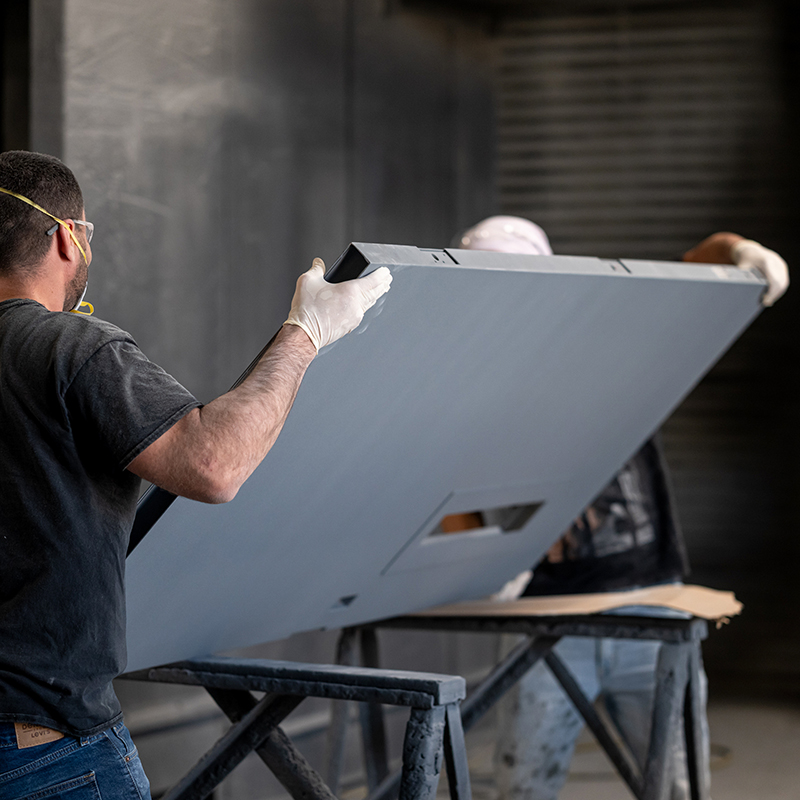
 Workers move a metal door during production at the Metal Manufacturing Co. facility in Sacramento, California, on May 27, 2025. Photographer: David Paul Morris/Bloomberg
In May, U.S. producer prices rose at the fastest pace in more than three years as the fallout from the Iran war continued to fan inflation pressures.
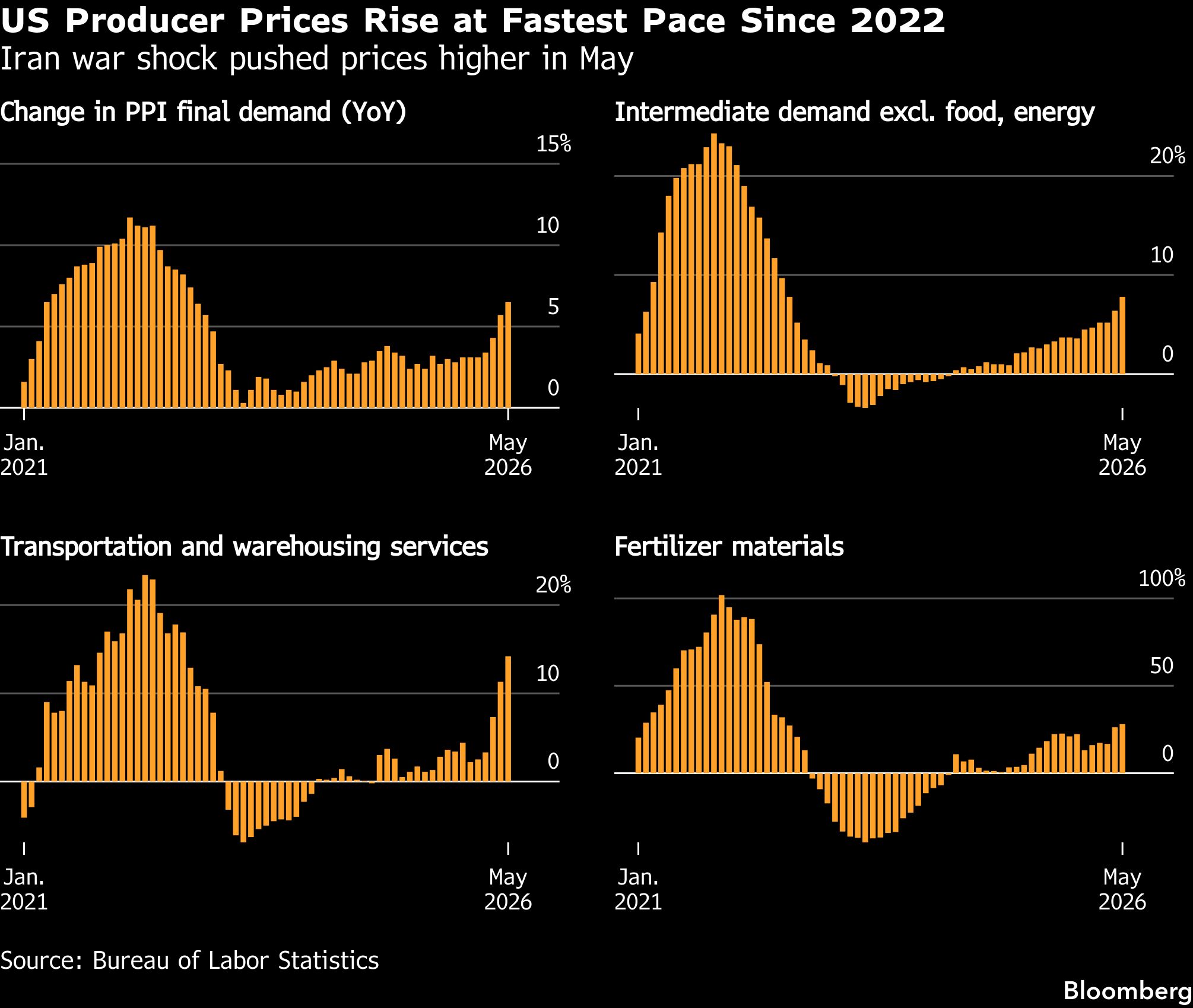
The producer price index (PPI) increased 6.5 percent from a year earlier, the most since November 2022, according to Bureau of Labor Statistics (BLS) data out yesterday. It advanced 1.1 percent from April. A core measure of prices that excludes food and energy increased 4.9 percent from May 2025.
The report highlights the rising toll the energy-price shock from the closure of the Strait of Hormuz is taking on the U.S. economy. With no quick resolution to the conflict in sight, other goods and services are starting to become more expensive as companies pass on higher energy and transportation costs.
Combined with other data this week that showed consumer prices rose last month at the fastest pace in three years, yesterday's release is likely to back calls for the Federal Reserve to raise interest rates in 2026. The central bank is laser-focused on taming inflation now that the labor market seems to be regaining momentum.
"Most of the increases were directly tied to higher costs for fuels and natural gas, but goods prices outside of energy jumped in May as supply-chain stress bleeds into other materials and components," Ben Ayers, a senior economist at Nationwide, said in a note. "With fuel prices fading so far in June, this may be the peak for producer price inflation, but the after-effects for consumer prices are likely to linger over the remainder of 2026."
Energy prices rose 10.7 percent in May, according to the report. Transportation and warehousing costs—which surged in the first two months of the war—continued to advance, posting a 2.6 percent increase. Trucking freight rates have been on the rise due to war-related fuel surcharges and a shrinking pool of drivers amid President Donald Trump's immigration crackdown.
Food prices, meanwhile, rose 0.6 percent, the most in three months. Grocery costs have been moving higher thanks to a combination of factors including bad weather, the war, and tariffs. Fertilizer materials costs were up 28 percent from a year earlier. A measure of inflation pressures earlier in the production process—the cost of processed goods for intermediate demand, excluding food and energy—rose from April by the most since 2021. Plastic resins and materials, a key input for a vast array of consumer goods, surged 14 percent on the month.
Several components of the PPI are also of particular interest because they feed into the the Fed's preferred inflation gauge, the personal consumption expenditures (PCE) price index. Most of those categories showed strength. Portfolio management fees saw a hefty rebound, rising by the most in almost a year. Hospital in-patient care and nursing home care also advanced, though a key measure of airfares fell for the first time since November. The Bureau of Economic Analysis (BEA) is scheduled to release May PCE price data, along with income and spending figures, on June 25.
.What Bloomberg economists say..."May's PPI details suggest upstream cost pressures are building. Goods categories are growing much slower than industrial categories, meaning costs haven't yet reached the consumer—potentially pointing to continued price sensitivity by shoppers. Elsewhere, higher transportation costs, driven by fuel and capacity constraints, are rising, as are inputs into production processes."— Troy Durie |
The report also provided updates on two other emerging sources of inflation pressures: data centers and defense production. The prices of electronics components and accessories fell from April for the first time in more than a year, but were still up nearly 27 percent from May 2025.
At the same time, prices associated with government purchases for defense were up almost 15 percent from a year earlier. Census Bureau figures published last month showed defense-related capital goods orders surged in April to the second-highest level on record, with economists citing replenishment of munitions destroyed in the Iran war as one possible driver.
Details in the PPI report on wholesale and retail trade services margins have also been under scrutiny for clues on the extent to which companies are still passing tariff-related costs to customers. In May, margins contracted by the most in almost a year.
While the U.S. Supreme Court struck down many of Trump's tariffs in February, the administration has since proposed new levies of at least 10 percent on imports from 60 trading partners.
————————————————————
Copyright 2026 Bloomberg. All rights reserved. This material may not be published, broadcast, rewritten, or redistributed.
© Arc, All Rights Reserved. Request academic re-use from www.copyright.com. All other uses, submit a request to TMSalesOperations@arc-network.com. For more information visit Asset & Logo Licensing.