A delayed snapshot of inflation in September came in softer than expected, potentially offering a path for the Federal Reserve to cut interest rates beyond next week’s meeting.
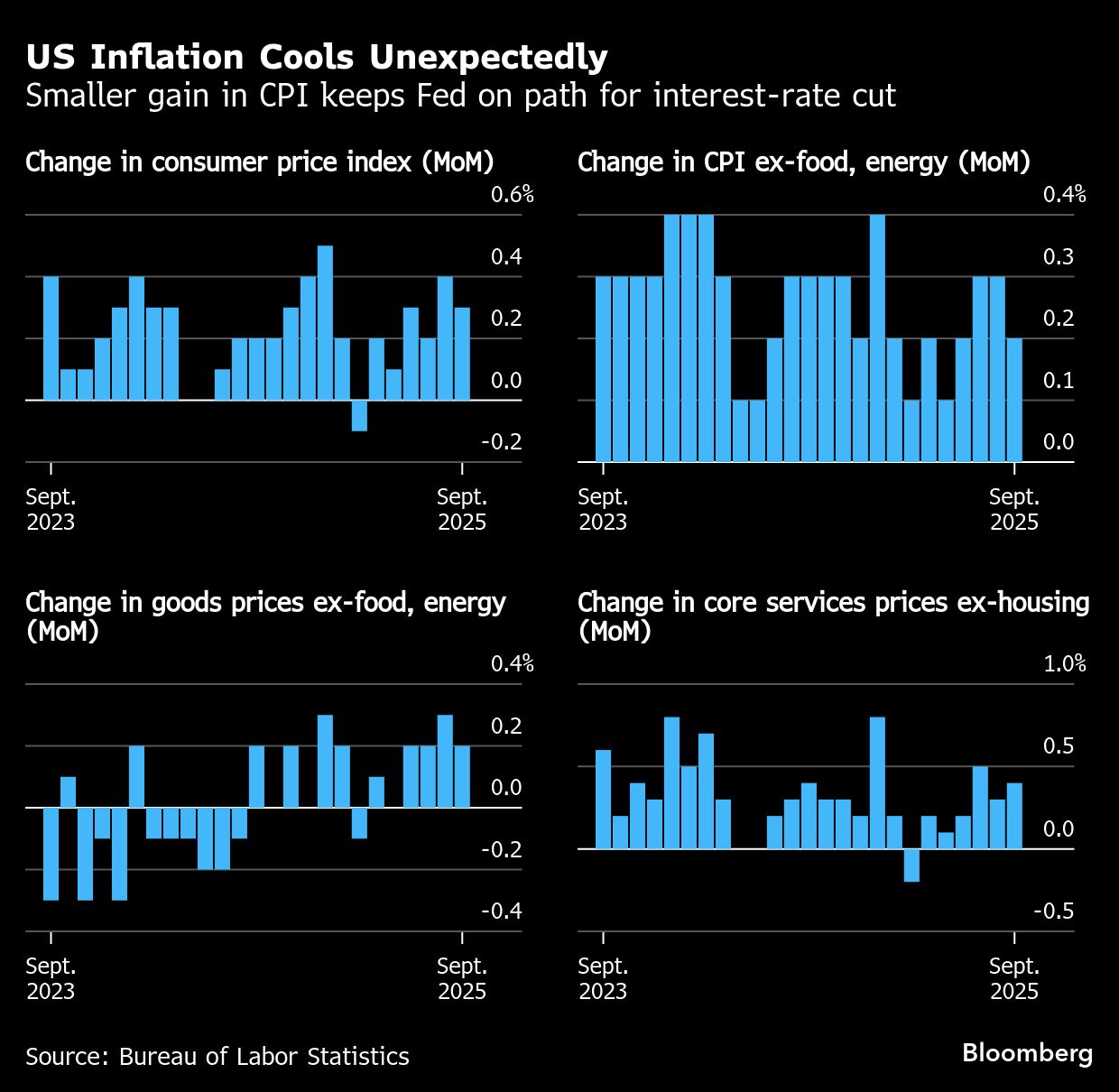
The core consumer price index (CPI), excluding the often volatile food and energy categories, increased 0.2 percent from August, according to Bureau of Labor Statistics (BLS) data out today. That was the slowest pace in three months and restrained by the smallest increase in a key measure of housing costs since early 2021.
In the absence of other official reports during the government shutdown, the highly anticipated reading is a welcome surprise, particularly for several policymakers who are leery of cutting rates further. While the central bank was already widely expected to lower borrowing costs at next week’s meeting, investors are betting the report will help convince officials that they can do so again in December—especially if they don’t get another CPI report next month.
The September CPI report was initially scheduled to come out on October 15 but was delayed because of the ongoing federal government shutdown. While most BLS operations have ceased since the October 1 closure, the agency recalled staff to prepare this release so the Social Security Administration could tally its annual cost-of-living adjustment, which will total 2.8 percent for next year.
Economists generally weren’t concerned about the quality of the September inflation report because data collection was done before the government closed. But BLS hasn’t been able to collect new price information since then, and a White House–affiliated X account said Friday “there will likely NOT be an inflation release next month for the first time in history.”
“Once funding is restored, BLS will resume normal operations and notify the public of any changes to the news release schedule on the BLS release calendar,” a BLS spokesperson said in an emailed comment.
.What Bloomberg Economists Say...“The CPI report—the first major government data release since the shutdown began—is tepid enough to seal the deal for a 25 bps rate cut later this month and another one in December.”— Anna Wong & Chris G. Collins |
Goods prices excluding food and energy commodities rose at a slower pace in September, dragged down by cheaper prices for used cars. Categories that are more exposed to tariffs, including household furnishings and recreational goods, advanced. Apparel prices climbed at the fastest rate in a year.
Services prices excluding energy climbed 0.2 percent, in part reflecting a slower advance in airfares. Shelter prices were tame after rising in the prior month by the most since the start of the year. That included just a 0.1 percent increase in owners’ equivalent rent, which accounts for roughly a quarter of the overall CPI. That said, stripping out housing and energy costs, a gauge of services prices remained firm. Price pressures for such services—which Fed officials have been keeping a close eye on—had subsided over the first half of the year but picked up steam in recent months.
Household expenses were mixed. While grocery inflation slowed, prices for key items like cereals and nonalcoholic beverages picked up. Gasoline costs jumped, while car insurance prices fell.
Separate data out today showed U.S. consumer sentiment dropped in October to a five-month low as worries about stubbornly high prices persisted.
Even though September data collection wasn’t affected by the shutdown, BLS expanded its use of a technique to fill in gaps in data it wasn’t able to gather through traditional methods. The share of imputed prices in the September CPI that relied on so-called different-cell imputation rose to 40 percent, up from 36 percent a month earlier and the highest in data back to 2019.
| Metric | Actual | Estimate |
|---|---|---|
| CPI month-over-month | +0.3% | +0.4% |
| Core CPI month-over-month | +0.2% | +0.3% |
| CPI year-over-year | +3.0% | +3.1% |
| Core CPI year-over-year | +3.0% | +3.1% |
While the inflationary impact of tariffs has been far lower than many economists feared, several forecasters and policymakers are still wary that the duties will continue to put upward pressure on prices—which was evident in some private-sector gauges of inflation in September. President Donald Trump’s latest tariffs, aimed at household goods like kitchen cabinets and upholstered furniture, took effect earlier this month, and retailers have warned of price increases to come.
Companies across the country have largely reported higher input costs due to tariffs in recent weeks, but the hit to consumers has been uneven, the Fed said in its latest Beige Book survey of regional business contacts. Procter & Gamble Co. is now expecting a more muted impact from tariffs and commodity prices, while O’Reilly Automotive Inc. said they adjusted selling prices to account for the increase in tariff-related costs.
“Businesses have so far shielded consumers from much of the increase in costs due to tariffs by absorbing them in margins, but further pass-through seems very likely in the months ahead,” Oliver Allen, senior U.S. economist at Pantheon Macroeconomics, said in a note.
In a separate report, the Social Security Administration said that, on average, Social Security benefits will increase by $56, to $2,071 per month, starting in January. Data from S&P Global released today showed U.S. business activity expanded this month at the second-fastest pace of the year.
————————————————————
Copyright 2025 Bloomberg. All rights reserved. This material may not be published, broadcast, rewritten, or redistributed.
© Arc, All Rights Reserved. Request academic re-use from www.copyright.com. All other uses, submit a request to TMSalesOperations@arc-network.com. For more information visit Asset & Logo Licensing.