 Shoppers browse in New York. Photographer: Jeremy Weine/Getty Images
Underlying U.S. inflation rose in December by less than expected, a signal of cooling price growth after shutdown-related distortions complicated the previous report. The core consumer price index (CPI), which excludes the often-volatile food and energy categories, increased 0.2 percent from November, according to Bureau of Labor Statistics (BLS) data released today. On an annual basis, the core CPI advanced 2.6 percent, matching a four-year low.
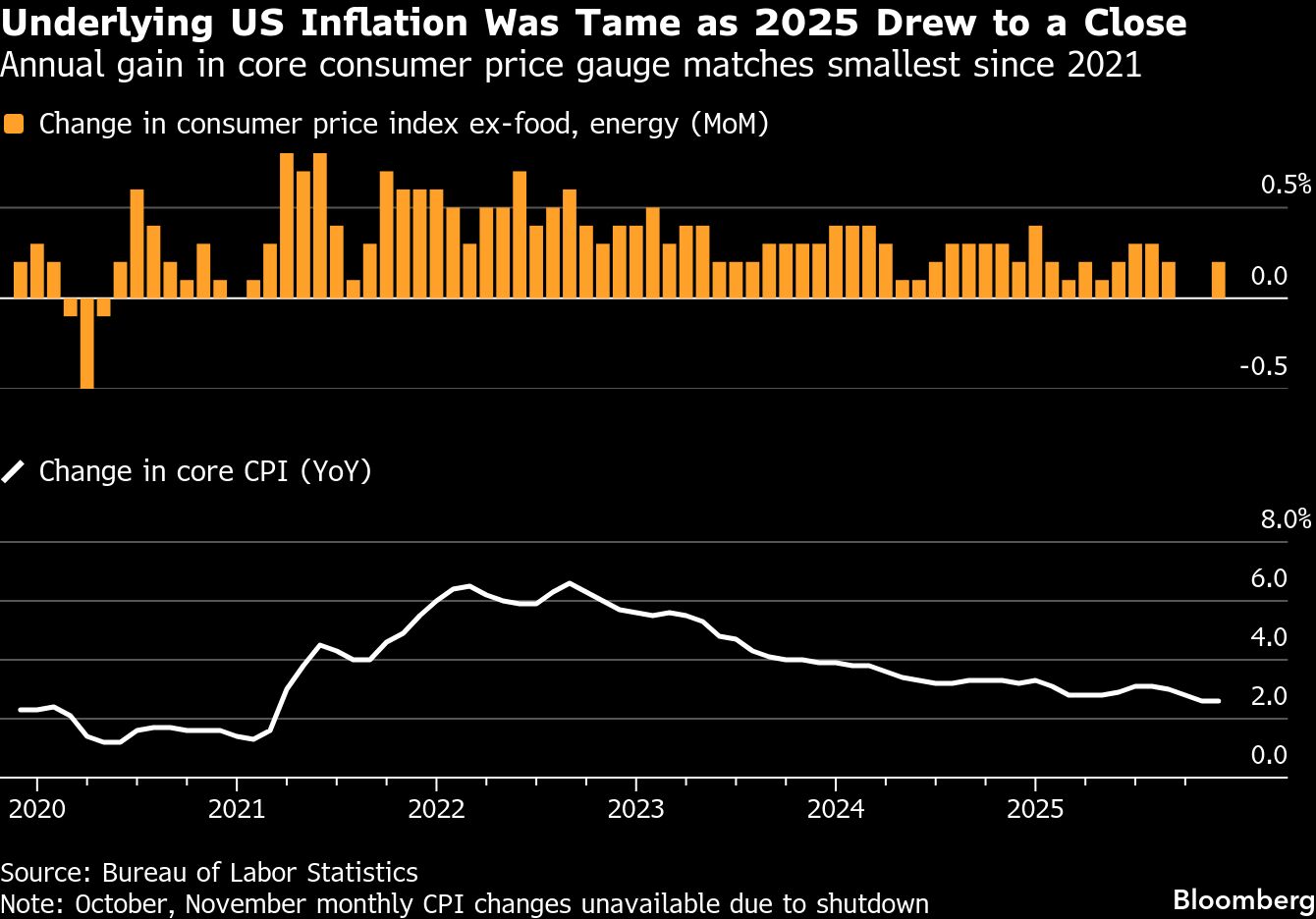
The reading is perhaps a more convincing sign that inflation is on a downward path, since a number of caveats in November’s report contributed to a significant pullback in the annual core CPI. Economists said that data was artificially depressed by the record-long government shutdown because the BLS couldn’t collect prices in October and assumed no increases in key housing metrics. November data were also collected later than usual and could have been affected by holiday discounts.
There was some bounce-back in shelter costs, which were the “largest factor” in the overall monthly advance, BLS said, while apparel prices also climbed. Recreation costs rose by the most ever, and airfares jumped. And grocery prices were up the most since August 2022.
However, several categories showed price declines, including appliances and used cars and trucks. Vehicle repair costs fell by the most on record. Core goods prices, which exclude food and energy, stagnated last month—also defying expectations.
While the shutdown impacts on the data haven’t fully unwound, “the key positive in this report is flat core goods prices, reinforcing the view that tariff pass‑through to consumers has been much milder than anticipated,” Olu Sonola, head of U.S. economic research at Fitch Ratings, said in a note.
Federal Reserve officials are widely expected to hold interest rates steady later this month after three straight cuts to close out 2025. Officials are divided over how much further to lower rates this year, balancing concerns about above-target inflation while also being mindful of softness in the labor market. President Donald Trump continued to berate Fed Chair Jerome Powell for being too late on cutting rates further, posting after the report on social media.
| Metric | Actual | Estimate |
|---|---|---|
| CPI month-over-month | +0.3% | +0.3% |
| Core CPI month-over-month | +0.2% | +0.3% |
| CPI year-over-year | +2.7% | +2.7% |
| Core CPI year-over-year | +2.6% | +2.7% |
One of the key drivers of inflation in recent years has been housing costs—the largest category within services—though those pressures largely waned throughout 2025. In December, shelter prices advanced 0.4 percent, the most since August. Excluding shelter, the core CPI climbed only 0.1 percent. Key housing metrics, including primary rents and owners’ equivalent rent, rose at a firm pace after the changes recorded from September to November were surprisingly small. Hotel stays also rebounded, rising the most since September 2023.
Another services gauge closely tracked by the Fed, which strips out housing and energy costs, rose 0.3 percent. On an annual basis, the so-called “supercore” rose 2.7 percent in December, compared with roughly 4 percent a year ago. That improvement should set up the Fed to cut rates further this year, said Chris Low, chief economist at FHN Financial.
While central bankers have stressed the importance of looking at such a metric when assessing the overall inflation trajectory, they compute it based on a separate index. That measure—known as the personal consumption expenditures (PCE) price index—draws from the CPI to compute certain costs. A government report on producer prices due tomorrow will offer insights on additional categories that feed directly into the PCE, which reports October and November figures later this month.
.What Bloomberg economists say...“December’s CPI report suggests the understatement of CPI in November was more muted than thought. The real signal is that tariff pass-through may already have peaked.”— Anna Wong, Chris G. Collins & Troy Duri |
Central bankers also pay close attention to wage growth because it can help inform expectations for consumer spending—the main engine of the economy. A separate report out today, which combines the inflation figures with recent wage data, showed that real average hourly earnings climbed 1.1 percent last month, from a year earlier. This metric has been positive for the past two and a half years, meaning that Americans’ pay, on average, is growing faster than prices. However, a stubbornly high cost of living has depressed measures of consumer sentiment and is poised to be a major issue in this year’s midterm elections.
Looking forward, economists expect inflation to ease gradually over the course 2026. Companies typically adjust their prices early in the new year, which could affect next month’s CPI report, while a pending Supreme Court ruling may deem many of Trump’s sweeping global tariffs illegal.
————————————————————
Copyright 2026 Bloomberg. All rights reserved. This material may not be published, broadcast, rewritten, or redistributed.
© Arc, All Rights Reserved. Request academic re-use from www.copyright.com. All other uses, submit a request to TMSalesOperations@arc-network.com. For more information visit Asset & Logo Licensing.